A DOCTOR’S GUIDE TO SKIN TREATMENTS IN KOREA
Hello, I’m Dr. Youro, a physician in Korea.
“Should I choose Juvelook or Lenisna? And what can be done to reduce the risk of lumps?”
Juvelook focuses on skin texture and fine lines. Juvelook Volume, also known as Lenisna, focuses on restoring facial volume. Both combine collagen-stimulating PDLLA with water-binding hyaluronic acid. The product, depth and distribution all matter.
Here is how I explain the difference, the recovery time, and the injection principles I use to avoid concentrating too much product in one place.
In this guideJuvelook vs Lenisna / PDLLA and HA / Results and duration / My injection principles / Downtime / Nodule treatment / Planning a visit to Korea
1. Juvelook vs Lenisna: what is the difference?
In Korean clinics, a “Juvelook skin” treatment commonly refers to treatment for skin quality. Juvelook Volume is the larger-particle, higher-content option, marketed internationally as Lenisna.
| Feature | Juvelook 50 mg | Volume / Lenisna 200 mg |
|---|---|---|
| Focus | Texture, fine lines, visible pores | Hollow cheeks, volume-related smile lines |
| PDLLA + HA per vial | 42.5 mg + 7.5 mg | 170 mg + 30 mg |
| Particles | Smaller | Larger |
| Main goal | Smoother, firmer skin | Gradual volume restoration |
This comparison is specifically for the 50 mg and 200 mg products. The current Korean range also includes a separate 30 mg product named Juvelook Skin. Ask to see the exact vial name and strength. Manufacturer’s product range, UK product guide.
Juvelook: improving the skin’s surface quality
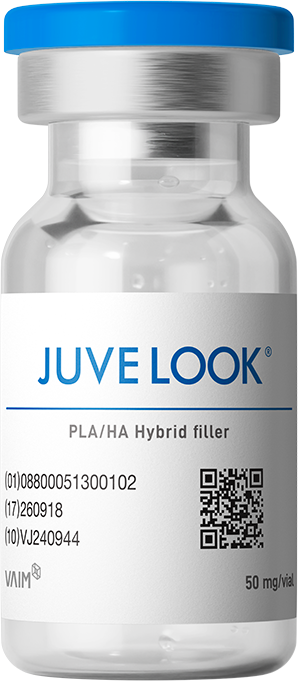
Juvelook 50 mg. Product photograph: VAIM.
Think of Juvelook when the concern is rough texture, fine lines or pores that look more noticeable as skin loses firmness. The goal is a smoother-looking surface, rather than filling a broad hollow in the cheek.
A 16-person preliminary study reported improvements in skin texture and fine lines. It used Juvelook mixed with additional HA and had no control group, so it cannot isolate the effect of Juvelook alone. Read the study.
Lenisna: gradually restoring lost volume
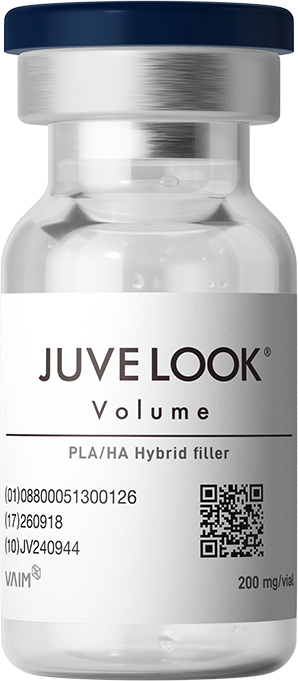
Juvelook Volume 200 mg, also known internationally as Lenisna. Product photograph: VAIM.
Lenisna is used for broader cheek hollows and nasolabial folds, the lines running from the nose toward the corners of the mouth, when loss of volume contributes to the problem.
A randomized split-face trial in 33 people found improvement in nasolabial folds after three treatments four weeks apart, with follow-up through week 24 from the first treatment. The manufacturer supported the study. Read the trial.
2. What do PDLLA and HA actually do?
PDLLA stimulates collagen formation
PDLLA stands for poly-D,L-lactic acid. It is a biodegradable polymer made from lactic-acid building blocks. Its microscopic particles stimulate a tissue response that encourages new collagen around them. The particles themselves gradually break down.
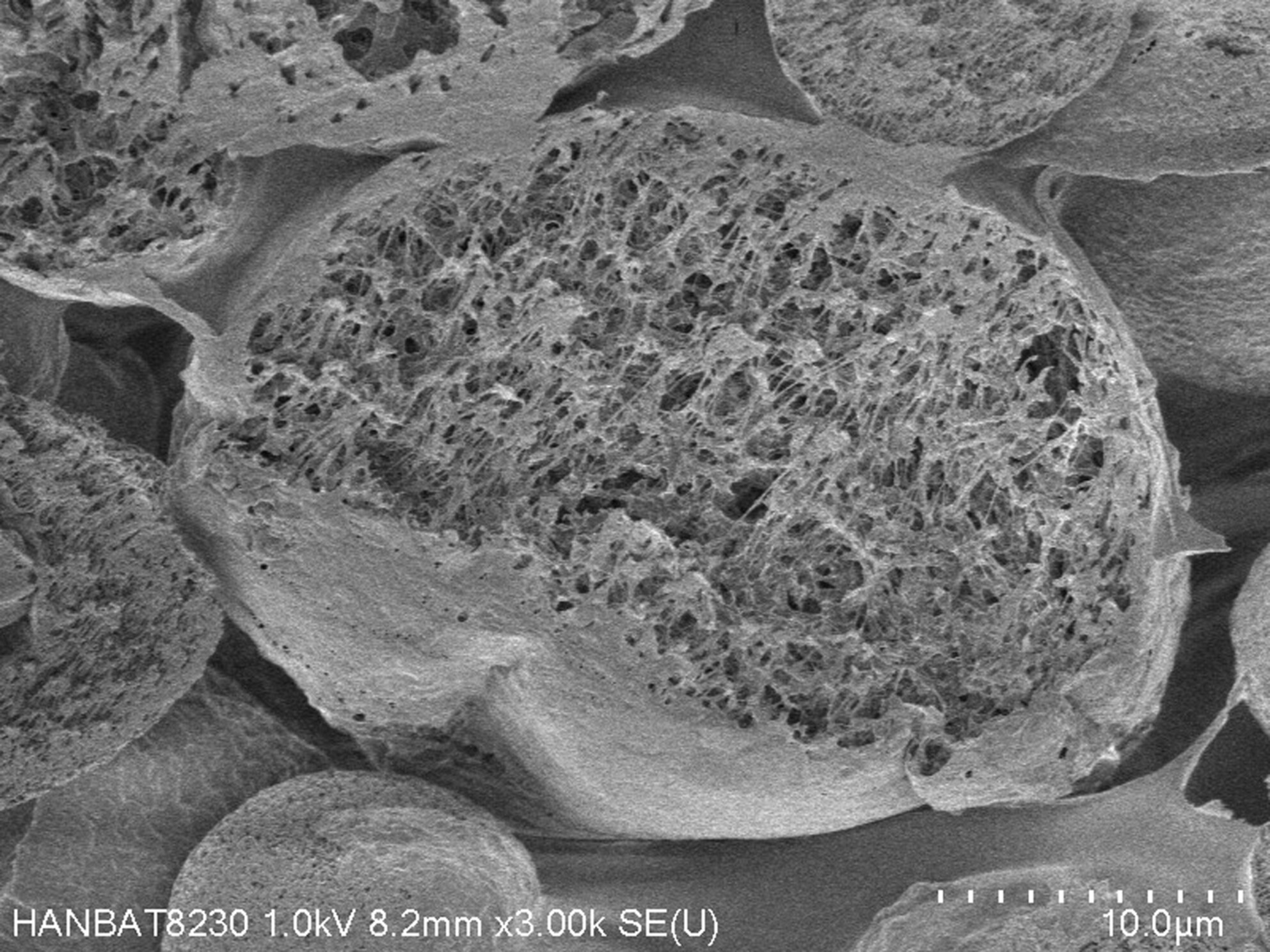
PDLLA particles under an electron microscope. Seo, Wan and Yi, 2025, Figure 4. Original article, CC BY 4.0. Unmodified figure.
HA attracts water and adds hydration
Hyaluronic acid, or HA, is a substance already present in your skin. It attracts and holds water, helping the treated tissue stay hydrated. It also acts as a carrier for the PDLLA particles.
The HA in these products is non-crosslinked. It is different from the crosslinked HA gel used in many conventional fillers to hold a shape for longer.
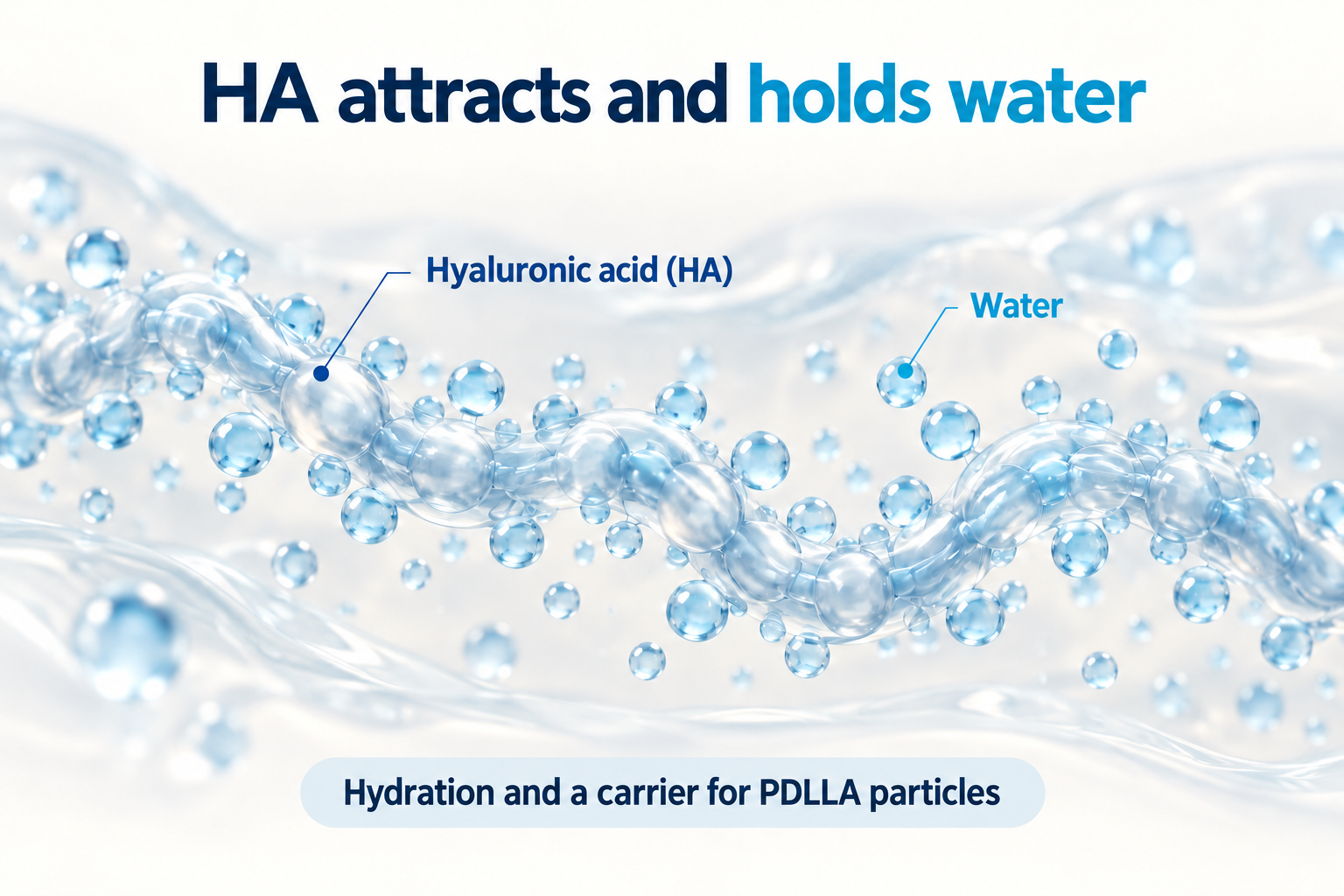
PDLLA encourages collagen. HA holds water. The early plumpness includes HA, injected fluid and swelling. It is not all newly formed collagen.
3. When will I see results, and how long do they last?
Expect gradual change over several weeks. A review around four to eight weeks is more useful than judging the result the next morning. Further change develops across a treatment course.
- Juvelook: product-guide duration of about 12–18 months.
- Lenisna: product-guide duration of about 18–24 months.
These are expectations after a treatment course, influenced by the amount used and number of sessions. They do not mean one injection lasts two years. The nasolabial-fold trial directly followed results for 24 weeks. Product duration guide.
4. My injection principles for reducing product clumping
A nodule is a lump you can feel or see beneath the skin. Product collecting in one spot or sitting too superficially can contribute. Inflammatory reactions and infection are different causes that also need assessment. Both Juvelook and Lenisna can cause complications.
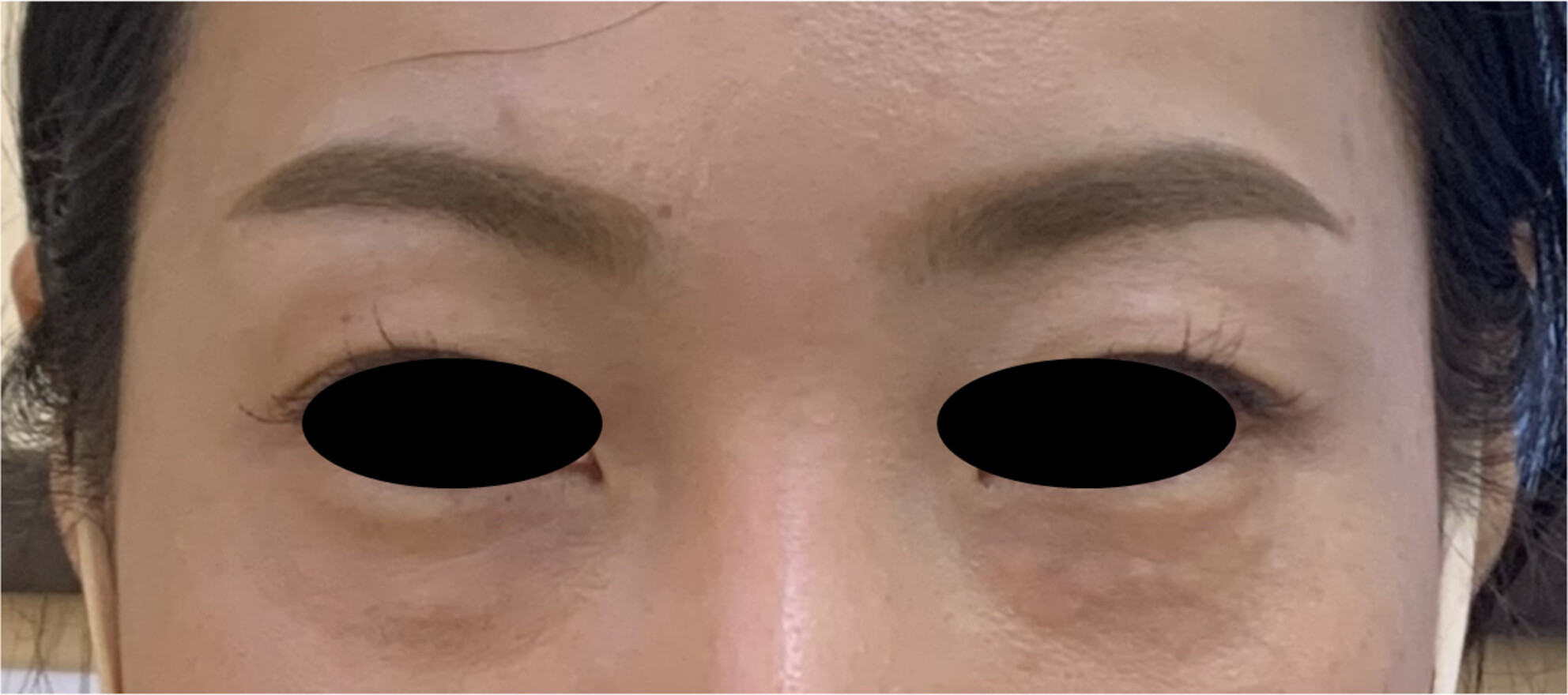
Nodules three weeks after Juvelook Volume was injected into the tear troughs. Published case photograph, not my patient. Seo, Wan and Yi, 2025, Figure 2. Original article, CC BY 4.0. Unmodified figure.
① Small amounts, spread evenly
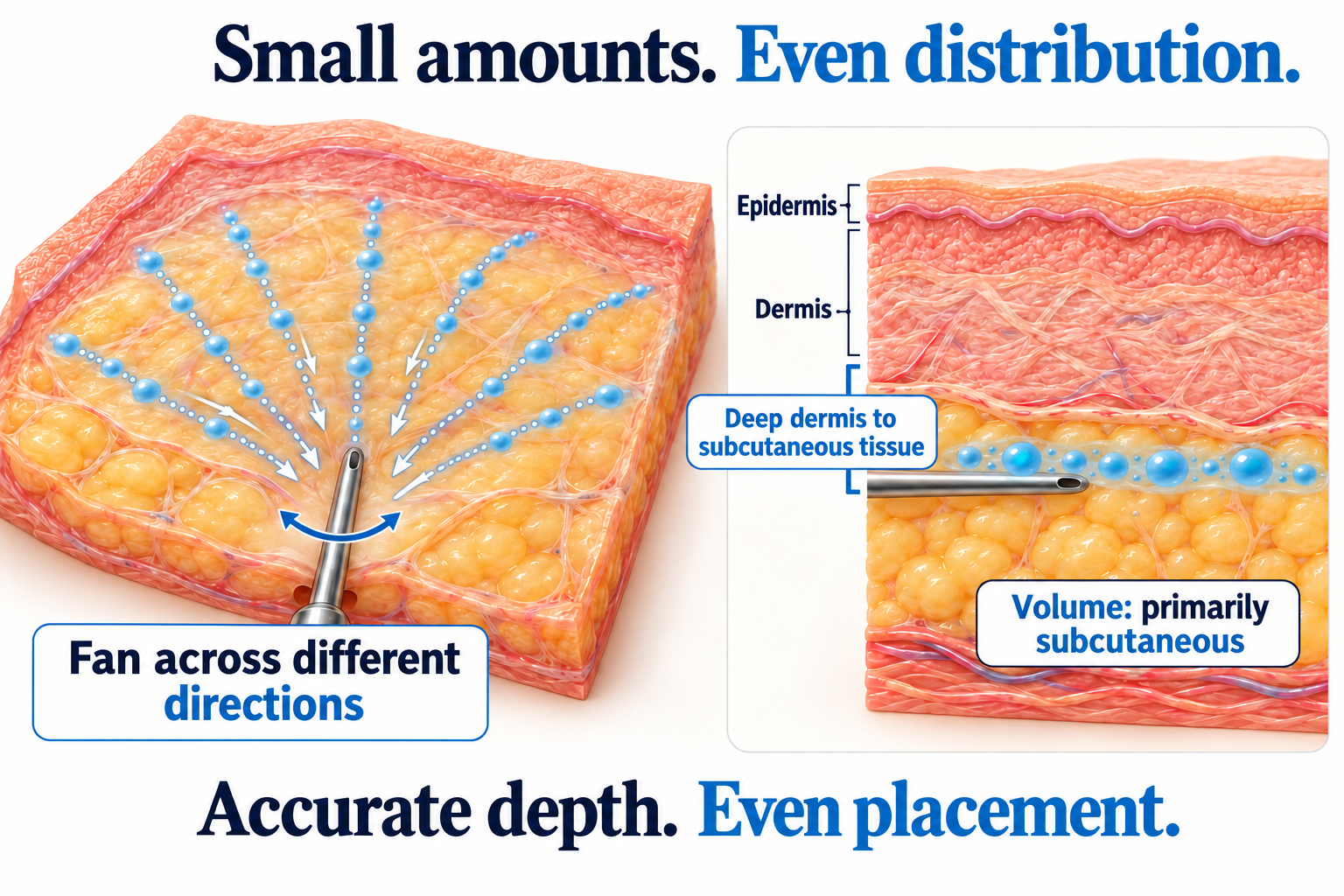
I adjust the cannula’s direction and position to distribute small amounts across the treatment area. I describe this as “seeding”, placing small deposits rather than leaving a concentrated collection in one spot.
The aim is even product distribution and a more even collagen response. It is not about making the greatest possible number of passes. I focus on controlled placement and avoiding repeated buildup at the same point.
② Match the depth to the product and the area
I assess skin thickness and the hollow being treated, then select the target plane within the deep dermis to subcutaneous tissue, with Volume placed primarily in the subcutaneous tissue.
Too shallow a deposit can become visible or palpable. Missing the intended plane can also leave the target hollow inadequately corrected. Deeper placement is not automatically ineffective: the nasolabial-fold trial also used deep fat and a plane above the bone. Trial technique.
The priority is accurate depth and even distribution. These principles address product clumping; they cannot eliminate every inflammatory or infectious complication.
③ Gentle massage, with clear aftercare instructions
Gentle massage immediately after treatment can help distribute the product. Whether to massage at home depends on the treatment area and the clinician’s instructions. Do not press hard on the under-eye area or try to flatten a persistent lump yourself.
A four-patient Juvelook study used brief clinician massage after treatment but advised against home massage. It did not test whether massage prevents nodules. Read the study.
5. How much downtime should I allow?
- Mild swelling: around 3–4 days for most participants in the Volume trial.
- Bruising: allow 1–2 weeks, based on general injectable-filler recovery guidance.
Leave at least two weeks before an important photo shoot or event if visible bruising would be a problem. This is a planning buffer, not a deadline for every bruise to disappear. Volume trial, American Academy of Dermatology guidance.
Increasing redness, warmth, pain or swelling, or a persistent hard lump, needs review. Severe pain, pale or dusky skin, or a change in vision needs immediate medical attention. FDA injection warning signs.
6. If a nodule has already formed, what treats it?
Normal saline does not dissolve PDLLA or newly formed collagen. NS, or normal saline, is sometimes used with physical dispersion to redistribute a localized product collection.
The first step is examination, with ultrasound when useful to identify its depth and nature. Treatment depends on the cause:
- Noninflamed product clumping: a clinician may consider saline-assisted dispersion. Older, firm nodules can respond poorly.
- Inflammatory granuloma: targeted steroid treatment, such as triamcinolone, may help after infection is excluded. Precise treatment matters because steroids can cause skin atrophy.
- Suspected infection: assess promptly for antibiotics and, if an abscess is present, drainage. Steroids are not the first step.
Persistent fibrotic nodules need reassessment and specialist treatment; removal is a last resort. Hyaluronidase, the enzyme used for HA filler, does not dissolve PDLLA. Clinical nodule-management commentary.
Radiofrequency improvement has been reported in a single case. That is not an established treatment for every nodule. Read the case report.
7. Planning Juvelook or Lenisna during a visit to Korea
A short trip may fit one session, but not a full course. The Volume trial used three appointments four weeks apart. Do not compress that schedule into a few days to fit a holiday.
- Compare the exact product and amount. Ask for the vial strength, number of vials and treatment area. A quote per mL alone does not tell you how much PDLLA is used after dilution.
- Ask what the price includes: consultation, anesthesia, tax and follow-up. Confirm who will perform the procedure.
- Get written aftercare you understand. Include massage instructions for your actual treatment area.
- Plan follow-up before leaving. Obtain the product record and a contact route if a lump appears after you return home. A review plan matters because nodules can appear weeks later.
Discuss your departure date with the treating clinician. Recovery, a flight schedule and when the final result becomes visible are separate questions. Plan treatment and recovery around your trip.
Quick questions
Is Lenisna simply a stronger Juvelook?
It contains more PDLLA per vial and larger particles, but “stronger” does not mean better for every concern. Choose the formulation for the goal: skin quality or volume.
Are all bumps immediately after treatment nodules?
No. Injected fluid and swelling can create temporary raised areas. A hard lump that persists or appears weeks later deserves examination.
Can I choose Lenisna for thin under-eye skin?
Do not assume a volumizing product is suitable wherever there is a hollow. Thin under-eye tissue needs a specific product and anatomy assessment. The published nodule photograph above involved Juvelook Volume in this area.
What I want you to remember: Juvelook and Lenisna address different goals. I pay close attention to where the product goes and how evenly it is distributed. How it is placed matters as much as how much is injected.
Your own, Dr. Youro
Related reading
- Rejuran in Korea: benefits, HB, pain and downtime
- Skin Botox in Korea: pores, fine lines and what to expect
- Read the original Korean article on Naver
References
- Park JY, Im DJ, Jeon HD, et al. A Split Face Study Comparing the Effect of a PDLLA Based Product and PLLA on the Nasolabial Fold (NLF). Skin Res Technol. 2026;32:e70324. DOI. Randomized, 33-person trial.
- Magacho-Vieira FN, Ducati EPJ. Clinical Management of Poly-D,L-Lactic Acid Nodules: A Guideline With Diagnostic and Treatment Flowchart. J Cosmet Dermatol. 2025;24:e70158. DOI. Clinical commentary.
- Seo SB, Park H, Jo JY, Ryu HJ. Skin rejuvenation effect of the combined PDLLA and non cross-linked hyaluronic acid: A preliminary study. J Cosmet Dermatol. 2024;23:794–802. DOI. Uncontrolled, 16-person study.
- Wan J, Hidajat IJ, Cartier H, et al. Evaluating Poly-D,L-Lactic Acid for Lower Eyelid Rejuvenation: Efficacy and Safety. J Cosmet Dermatol. 2025;24:e70058. DOI. Four-patient series.
- Seo SB, Wan J, Yi KH. Energy-Based Device Management of Nodular Reaction Following Poly-D,L-Lactic Acid Injection for Tear Trough Rejuvenation. J Cosmet Dermatol. 2025;24:e16575. DOI. Single case, source of Figures 2 and 4.
Updated October 23, 2026. Product guides and recovery resources are linked alongside the relevant sections.


Leave a Reply