DR.YOURO / TREATMENT GUIDE
Hello, I’m Dr. Youro, a physician in Korea.
Considering ONDA lifting in Korea? The useful question is not simply “How many joules can I buy?” It is: which part of my face needs contouring, and which volume should be preserved?
ONDA uses microwave energy to heat selected tissues for contouring and tightening. The handpiece, treatment area and your existing facial volume matter more than the headline energy total. It is a non-surgical treatment, with results and risks that depend on the individual plan.
This guide adapts my Korean ONDA article for English-speaking readers visiting Korea. I’ll explain the terminology, the research, and the practical questions worth asking before you book.
1. What does “ONDA lifting” mean?
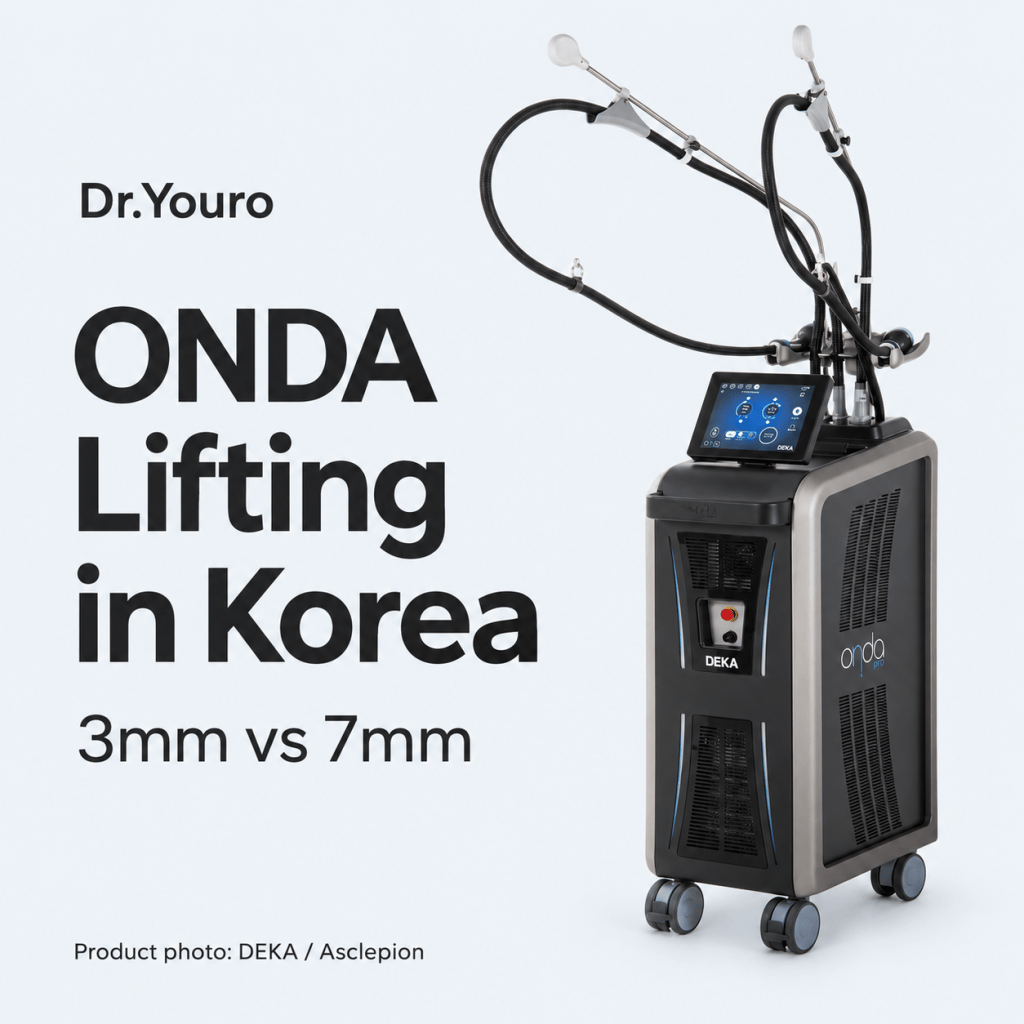
In Korean clinic menus, “lifting” often describes non-surgical tightening or contour improvement. It does not mean a surgical facelift. ONDA is a DEKA platform using 2.45 GHz microwaves, marketed as Coolwaves. The applicator delivers energy while contact cooling helps protect the skin surface. DEKA’s product information distinguishes Pocket, Shallow and Deep handpieces.
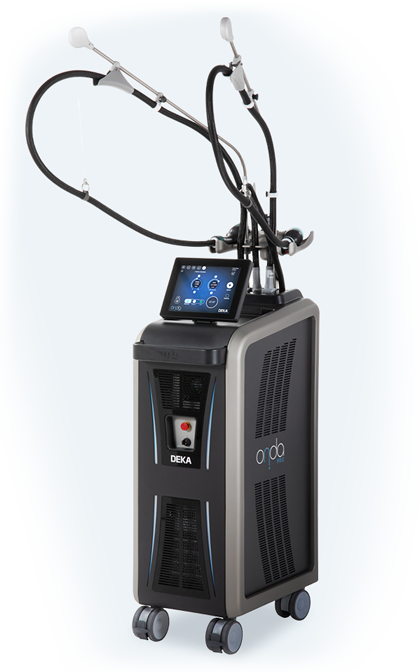
The ONDA PRO platform. Confirm the actual model and available applicators with your treating clinic. Photo: DEKA / Asclepion, official ONDA PRO product page.
The intended effect involves heat-related changes in fat and connective tissue. Think of the face as several different tissues stacked and arranged together, rather than a single layer to shrink. Skin laxity, excess fat and a lack of supporting volume can create similar-looking concerns but need different plans.
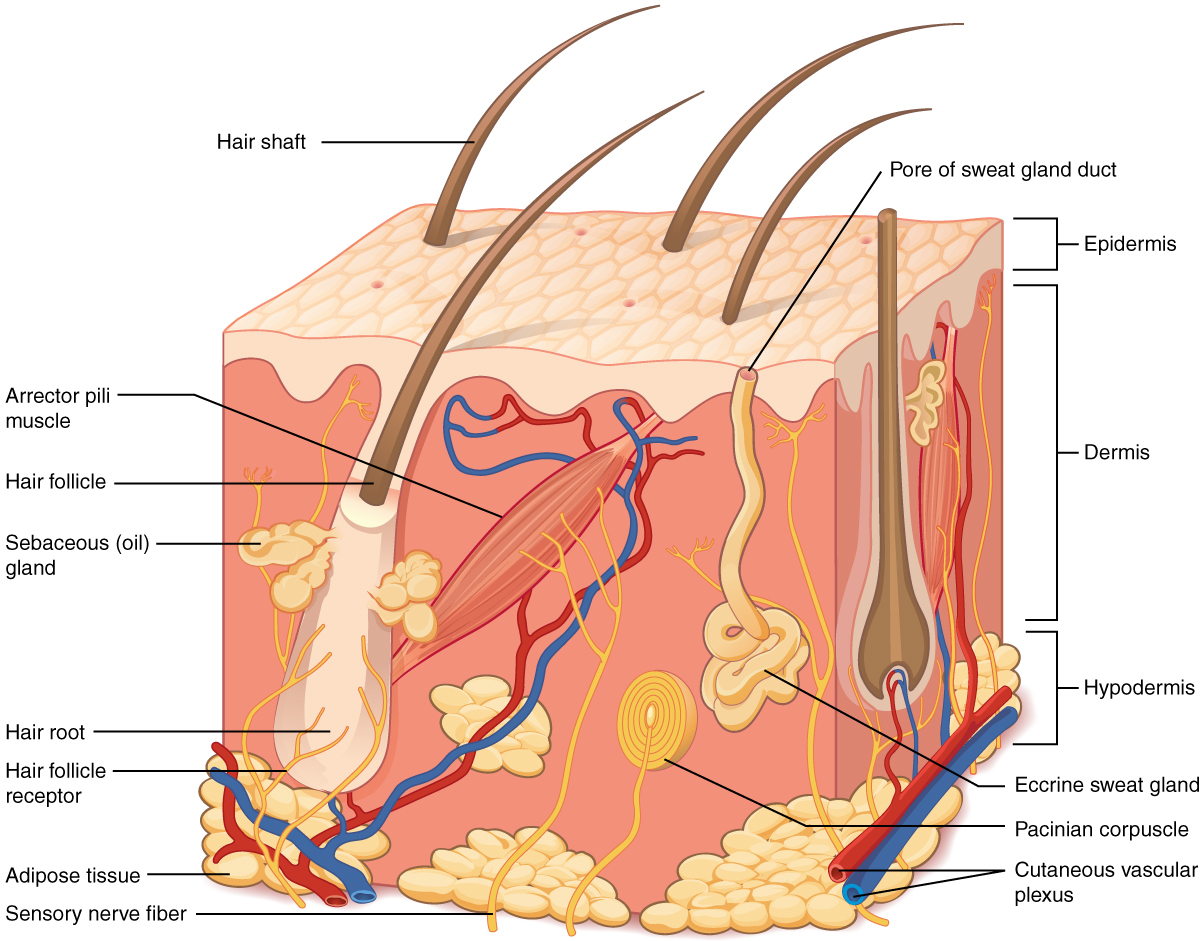
Skin and subcutaneous tissue are distinct layers. This general anatomy illustration is not an ONDA treatment map or a scale drawing of facial depths. OpenStax College, Structure of the Skin, CC BY 3.0, reproduced unchanged.
2. What is the difference between the 3mm and 7mm tips?
Ask for the actual handpiece name. The nominal depth labels in ONDA PRO specifications are Pocket 3mm, Shallow 7mm and Deep 12mm. A 7mm handpiece is deeper than Pocket, but its product name is Shallow, not Deep. Asclepion’s ONDA PRO specifications list all three.
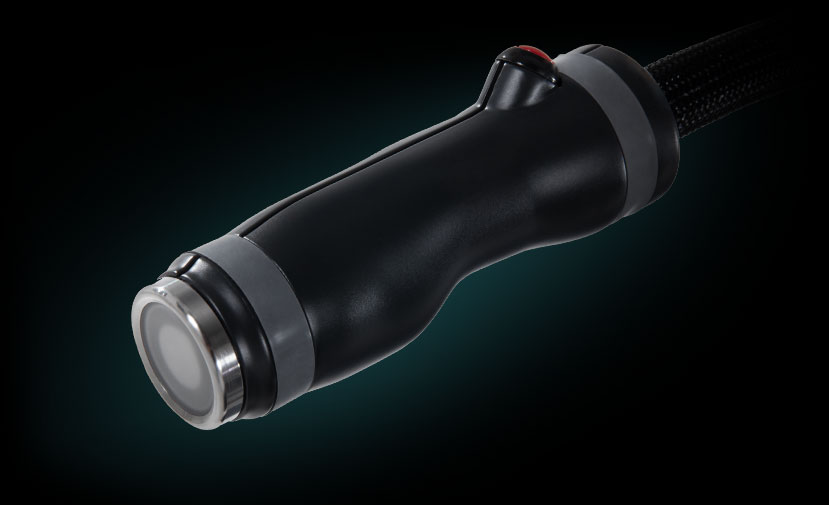
Pocket handpiece, nominal 3mm depth, shown here to identify the applicator discussed above. Nominal depth is not a precise boundary in every face. Photo: DEKA / Asclepion, official ONDA PRO product page.
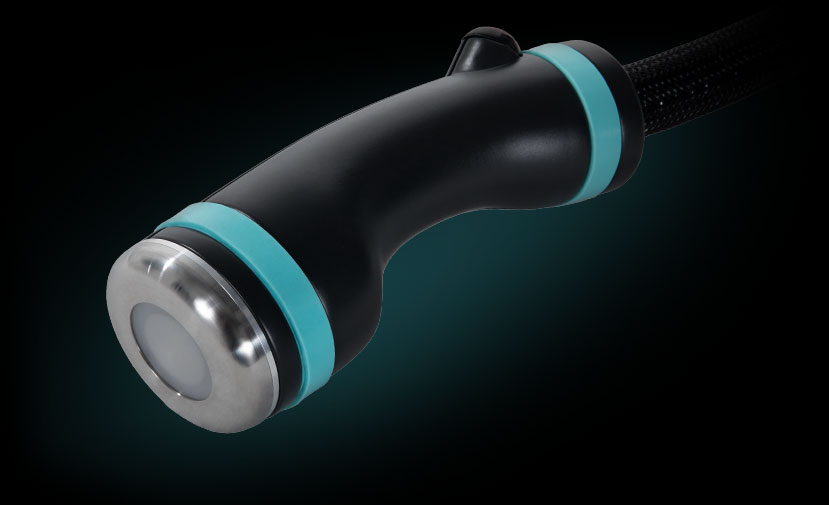
Shallow handpiece, nominal 7mm depth. “Shallow” is its product name; it is deeper than the 3mm Pocket applicator. Handpiece selection depends on anatomy and treatment goals. Photo: DEKA / Asclepion, official ONDA PRO product page.
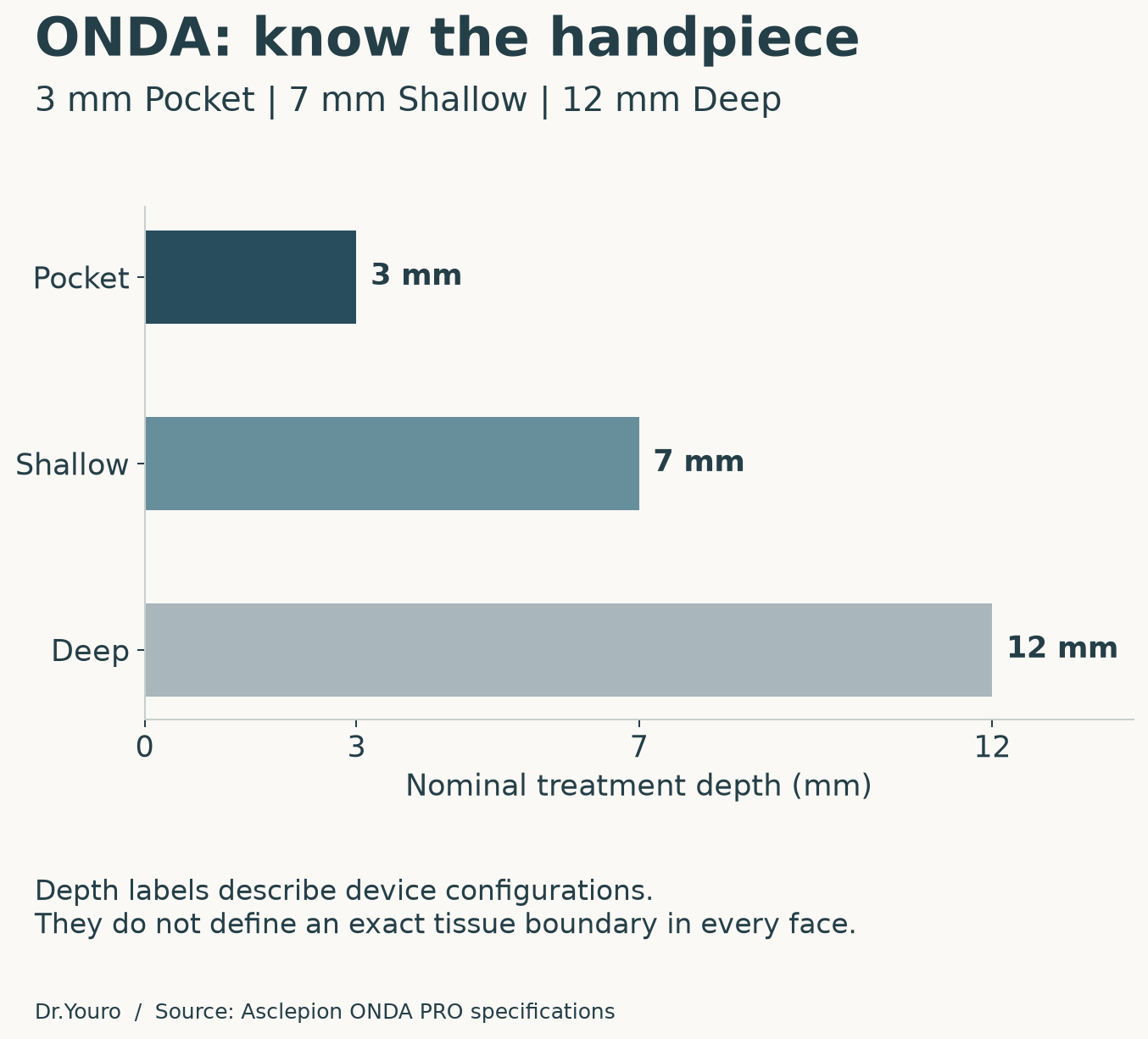
Nominal handpiece depths, not fixed anatomical boundaries. Original Dr.Youro chart from the ONDA PRO specifications. This comparison does not imply that every handpiece is appropriate for the face.
| Handpiece | What to clarify |
|---|---|
| Pocket, 3mm | Designed for superficial tightening and smaller areas. Is it the planned applicator for your facial concern? |
| Shallow, 7mm | A different heating distribution. Why is it suitable for the proposed tissue and location? |
| Deep, 12mm | Associated with deeper body fat treatment. Do not interpret it as a routine facial upgrade. |
Skin thickness, fat thickness, applicator contact and tissue geometry all matter. These numbers should not be read as identical to the sharply defined focal-depth labels used for focused ultrasound.
There is also a model and evidence distinction: the 2024 international recommendations primarily describe standard Shallow and Deep applicators, with specific restrictions around the head and neck. The newer Pocket study concerns a different applicator. A clinic should explain the exact device, applicator and proposed use instead of treating every ONDA protocol as interchangeable. Read the advisory recommendations.
3. Why do I map the areas to preserve first?
My starting point is the concern you actually want to change: fullness under the chin, heaviness near the jawline, or loose-looking skin. I then look for areas where volume is already limited.
A slimmer lower face should still connect naturally to the cheeks. Reducing volume everywhere is not the goal.
For someone with hollow lateral cheeks beneath the cheekbones, I pay particular attention to the regions I would leave alone. Treating an already depleted area can make the transition look less smooth. “Full-face treatment” should never replace an individual assessment.
Descriptions such as “deep cheek fat” on Korean menus can be loose translations of visible cheek fullness. They do not establish that a procedure selectively removes the anatomical buccal fat pad. Ask the clinician to show you the intended area and explain what tissue is being targeted.
4. What do actual tissue photographs show?
A 2025 histology study examined abdominal tissue from five women after one ONDA Plus treatment, with surgery five days later and untreated tissue for comparison. It found altered fat-cell structure and loss of Perilipin-1 staining in damaged regions. Some authors were employed by the manufacturer’s group. Read the study.
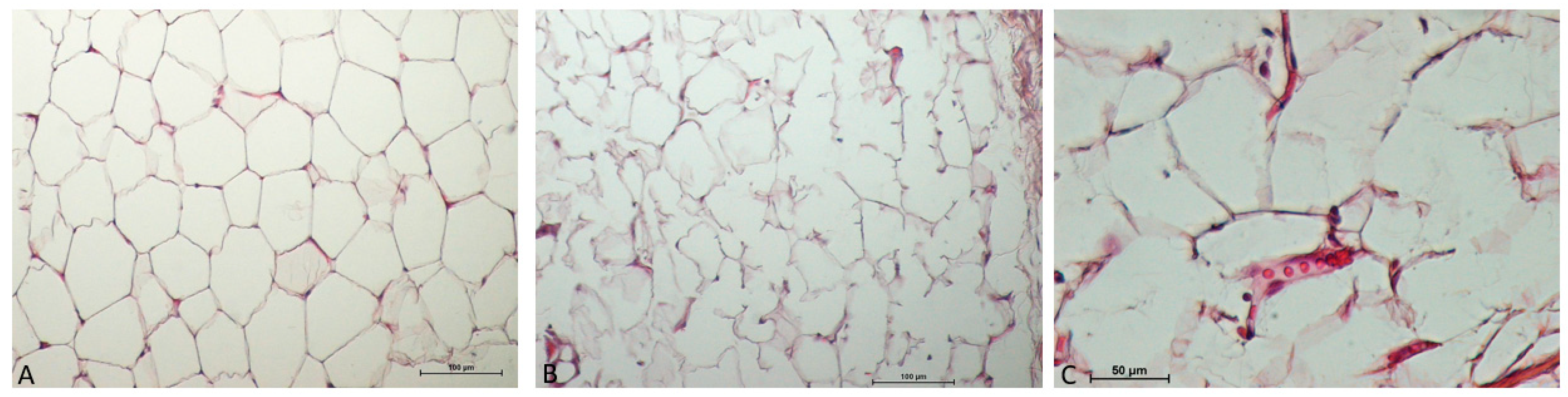
Under the microscope: A shows untreated abdominal fat; B and C show treated tissue with altered cell outlines and vascular changes. Zappia et al., Cosmetics 2025;12:42, Figure 2, source, CC BY 4.0, image unchanged.
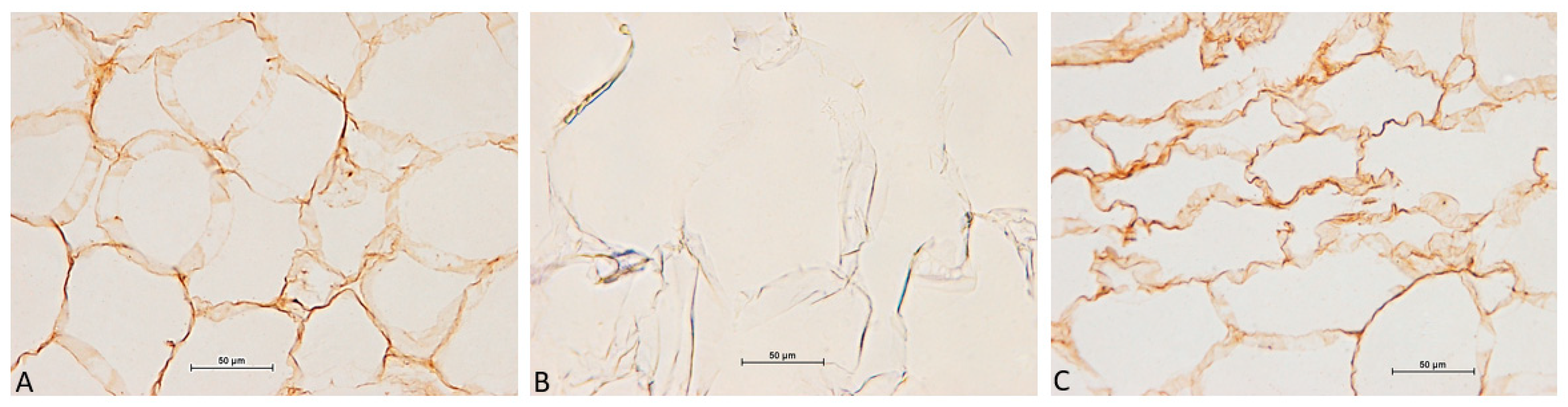
A stain for fat-cell viability: A is the untreated comparison; B shows reduced staining in injured tissue; C retains staining in deeper tissue. Zappia et al., Cosmetics 2025;12:42, Figure 3, source, CC BY 4.0, image unchanged. Tap to enlarge.
These are abdominal laboratory findings using a Deep applicator, not facial before-and-after results. They help explain tissue effects, but cannot tell us how much a cheek will slim or establish a safe facial dose. The article’s captions and methods also differ in their timing descriptions; the methods specify sampling five days after treatment.
5. Are more joules better?
Not automatically. J stands for joules, a unit of energy. It is not a count of ultrasound shots or treatment lines. The same total can be spread across a large area or delivered within a smaller area, with very different implications.
When discussing a plan, I want to know where the energy is going, how evenly heat is building, and whether the tissue still needs more treatment. A larger number alone cannot answer any of those questions.
I also check the skin’s response and your feedback. I adjust movement and redistribute treatment across planned areas instead of repeatedly heating one small spot. Consistent contact and cooling along facial curves matter; pushing harder is not the aim. Surface temperature is useful feedback, but it does not fully measure the temperature deeper down.
Sharp, focal or escalating pain is a reason to speak up immediately. It is not something you need to endure to prove that the treatment is working.
6. What results does the facial research support?
In a small prospective study, ten women received two Pocket treatments 30 days apart. Mean submental skin laxity grade fell from 3.6 to 2.3 at 12 weeks after the final session. There was no untreated comparison group. This is encouraging preliminary evidence for the area under the chin, not a guarantee of the same change in every patient. Zappia et al., 2025.
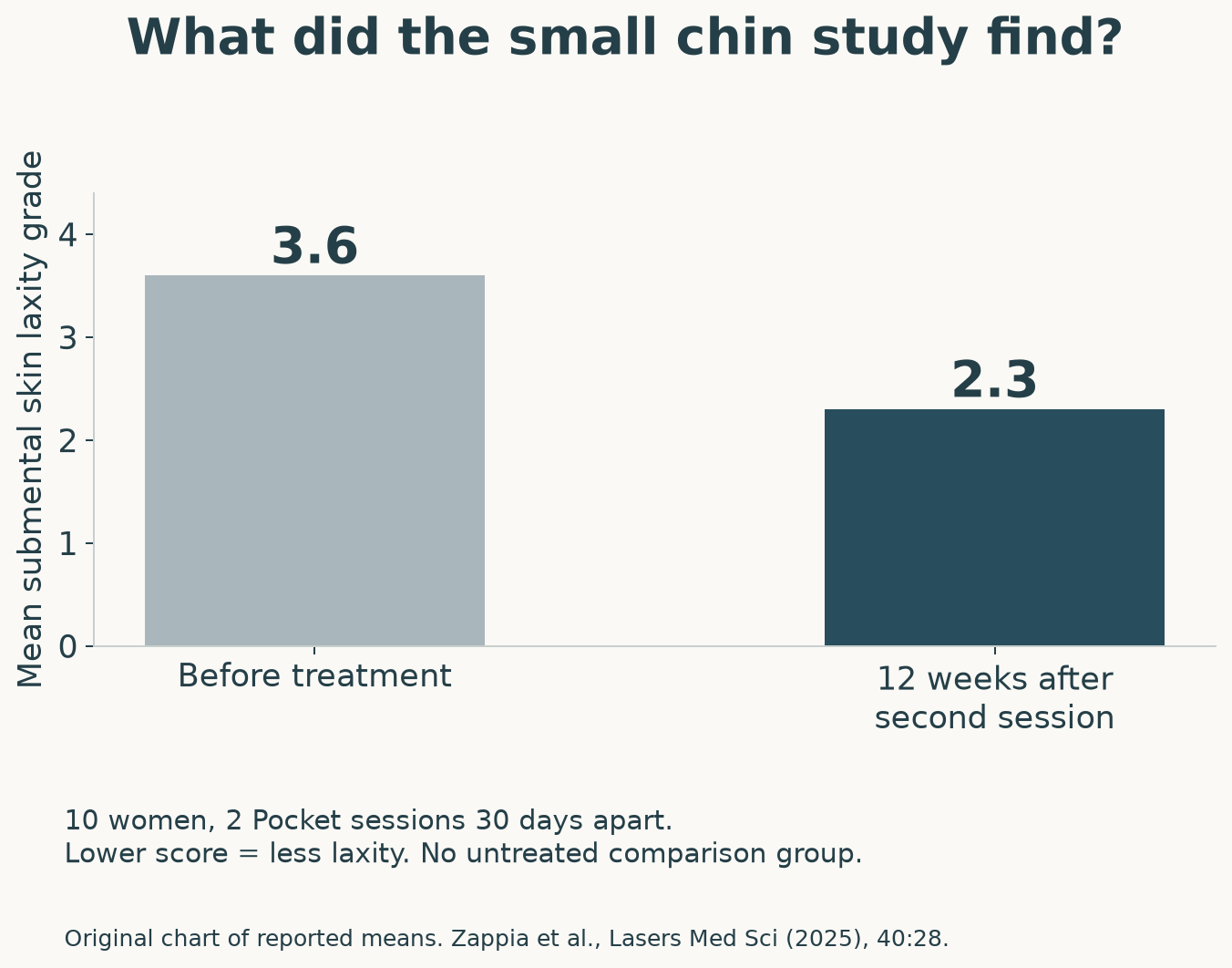
Original chart of the published group means, not a reproduction of the paper’s figure. Zappia et al., 2025. The scale measures laxity, not percentage fat loss; no individual results or error bars are inferred.
A newer retrospective study compared 89 microwave-treated patients with 82 HIFU-treated patients. Its abstract reports greater early improvement with microwaves at one month, while HIFU performed better on several outcomes at three months. Because treatment was not randomized, it does not establish that one technology is universally better. This summary is based on the verified abstract, not the full paper. Nam et al., 2026.
Body evidence is separate: a 16-woman study used four monthly sessions on the abdomen or thighs and assessed outcomes four weeks later. It reported improvements in circumference, cellulite and laxity, but those results should not be converted into a facial slimming promise. Arrigoni et al., 2024.
7. How should I plan ONDA around a trip to Korea?
Separate three dates: your treatment, the opportunity to check recovery, and the later assessment of results. A short visit may cover the first two but finish well before the third.
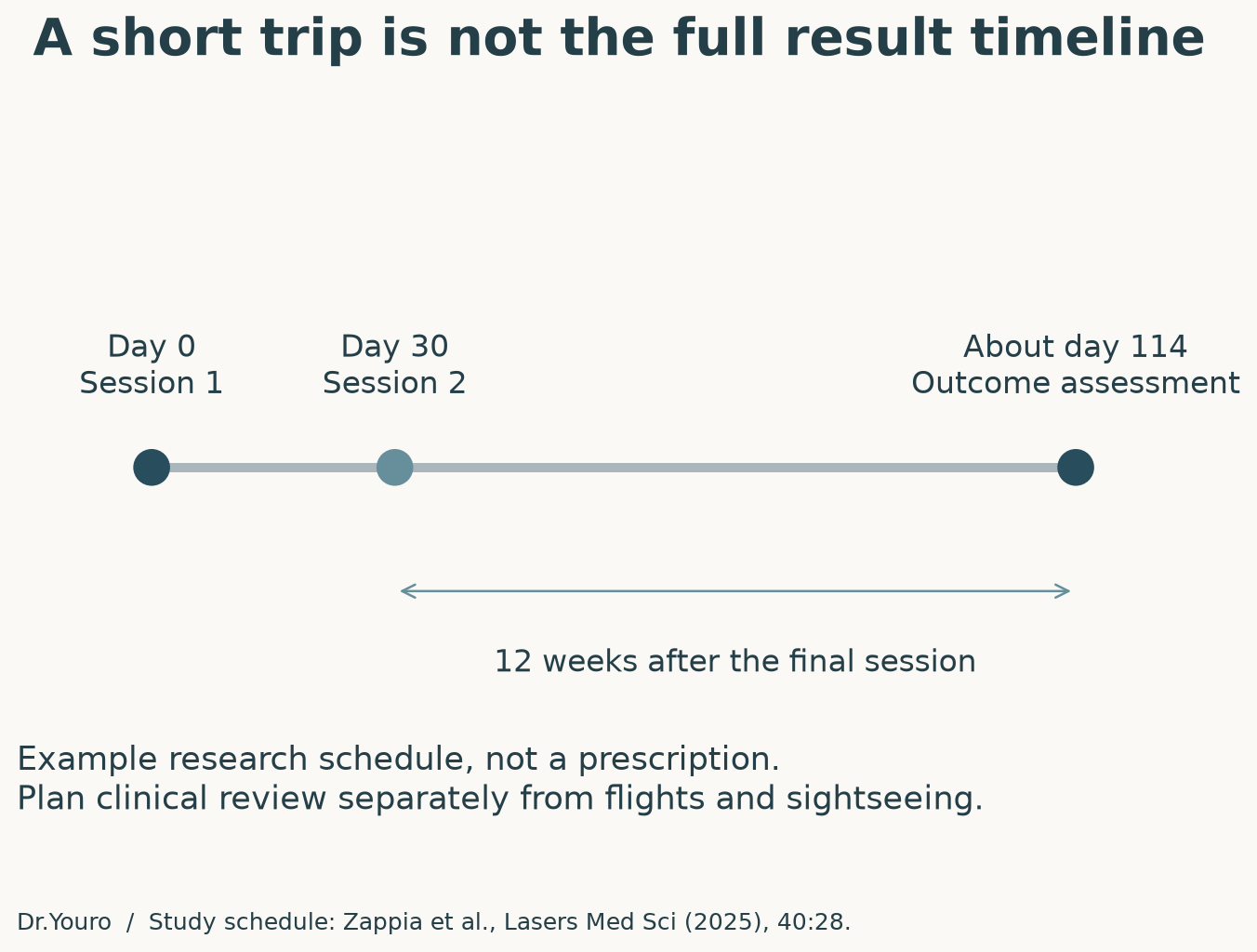
The Pocket study illustrates why the final result may be assessed after you return home. Original timeline based on Zappia et al., 2025; it is not a recommended schedule for every patient.
Before paying, ask for a written plan covering:
- The clinician and consultation: who will assess and treat you, and whether you can discuss benefits, alternatives and complications in a language you understand.
- The device and map: model, handpiece, areas treated and areas deliberately preserved.
- An itemized quote: energy total, treatment areas, number of sessions, consultation charges, taxes where applicable, and follow-up arrangements.
- Your itinerary: flight date, activities, other planned treatments and time available for review.
- After returning home: a contact method, response arrangements and instructions for obtaining local medical assessment if needed.
Do not assume a Korean treatment menu matches US or UK labeling. DEKA explicitly notes that some configurations and intended uses on its international website are not available in the USA. Verify the specific device and proposed treatment rather than relying on a broad “approved technology” claim. Manufacturer information.
8. What downtime and warning signs should I expect?
Redness, tenderness, swelling or temporary firmness can occur. In my original guide, I advise allowing for symptoms that may last several days, sometimes around a week, depending on the treatment and the person. Recovery can take longer when a complication develops.
Burns, blistering, persistent nodules and contour irregularity are possible complications discussed in the international advisory report. A low-downtime description does not mean zero risk.
Contact the clinic promptly for worsening pain, blisters, unusual skin discoloration, or a persistent or enlarging lump. New facial weakness or other significant unexpected symptoms also need prompt medical assessment. Seek local care if you cannot reach the treating clinic.
Get individualized advice about flying, exercise, heat exposure and combining procedures. Disclose recent injectables, surgery, implants, pregnancy, medicines and any changes in skin sensation. Do not stop prescribed medication on your own to fit a treatment appointment.
Frequently asked questions
Can ONDA cause hollow cheeks?
Unwanted volume reduction or contour change is a concern when the wrong tissue or area is treated. I prioritize identifying existing hollows and preserving volume. The papers discussed here do not provide a reliable percentage risk of cheek hollowing.
Does the 3mm tip remove that risk?
No. A shallower applicator changes the intended treatment distribution; it does not replace careful patient selection, technique or monitoring.
Will one session during my holiday be enough?
That depends on your starting anatomy and goal. Published protocols often involve multiple visits. Ask what a single session can reasonably achieve and what follow-up is possible after departure.
Is ONDA the same as HIFU or Botox?
No. ONDA uses microwaves, HIFU uses focused ultrasound, and botulinum toxin acts on nerve signaling. They address different tissue problems. My Botox guide explains why jaw-muscle treatment is different from fat contouring.
What should I ask first at the consultation?
“Please show me the areas you would treat, the areas you would preserve, and why this handpiece suits my face.” That answer tells you more than the energy total on a package.
My priority is a natural transition between the cheeks, jawline and chin. Start with the tissue and the treatment map, then choose the applicator and energy plan.
Your own, Dr. Youro
References
- Zappia E, Bonan P, Coli F, et al. An innovative microwave technology for the treatment of submental skin laxity. Lasers in Medical Science. 2025;40:28. doi:10.1007/s10103-024-04270-1.
- Nam HJ, Cheon N, Choi YS, Kang HY, Kim SY, Choi HJ. Efficacy and Safety of Microwave Energy-Based Device for Facial Rejuvenation: A Retrospective Comparative Study With High-Intensity Focused Ultrasound. Aesthetic Surgery Journal. 2026;46(5):543–554. doi:10.1093/asj/sjaf264. Abstract reviewed.
- Zappia E, Bennardo S, Fasano G, et al. Efficacy of a New Non-Invasive System Delivering Microwave Energy for the Treatment of Abdominal Adipose Tissue: Results of an Immunohistochemical Study. Cosmetics. 2025;12(2):42. doi:10.3390/cosmetics12020042.
- Hoffmann K, Zappia E, Bonan P, et al. Microwave-Energy-Based Device for the Treatment of Cellulite and Localized Adiposity: Recommendations of the “Onda Coolwaves” International Advisory Board. Bioengineering. 2024;11(12):1249. doi:10.3390/bioengineering11121249. Expert recommendations, not a randomized facial trial.
- Arrigoni F, Fusco I, Zingoni T, Massirone A. Non-invasive system delivering microwaves energy for localized adiposity reduction, skin laxity, and cellulite: Clinical evidence. Journal of Cutaneous and Aesthetic Surgery. Published online October 29, 2024. doi:10.25259/JCAS_7_2024.
This article explains treatment choices and research; an individual treatment plan requires an in-person assessment. Research photographs are attributed to their authors and are not cases from my practice.


Leave a Reply