By Youro Kang, MD, Dr. Youro, a licensed physician in South Korea
You may have seen “skin Botox” on a Korean clinic menu and wondered: is it regular Botox, a skin booster, or something else?
Skin Botox uses small, shallow deposits of botulinum toxin to target concerns such as oiliness, visible pores and fine skin texture. Some small studies suggest benefits, but results vary, pores do not disappear permanently, and facial movement can still be affected.
I’m Dr. Youro. Here is how I would separate the treatment’s appeal from the questions worth asking before you book it in Korea.
1. What is skin Botox, and how is it different?
“Skin Botox” describes a treatment approach, rather than one standardised product. You may also encounter “microbotox” or “microtoxin”. Clinics can use these names differently, so ask what is actually being injected and where.
Conventional wrinkle treatment generally aims to reduce the activity of selected muscles. Skin Botox distributes small amounts more superficially, often within the dermis, the layer beneath the outer epidermis. The intended emphasis is skin quality rather than weakening a particular muscle.
| Approach | Main aim | Important limit |
|---|---|---|
| Conventional wrinkle Botox | Reduce selected muscle activity and expression lines | Unwanted weakness can change expression |
| Skin Botox | Address oiliness, fine texture and pore appearance | Shallow placement does not eliminate muscle effects |
“Baby Botox” is also a marketing term, not a reliable description of injection depth. And skin Botox is not a hyaluronic acid skin booster: the injected substance and intended actions are different.
BOTOX is a brand of onabotulinumtoxinA. A clinic using “Botox” informally may offer another botulinum toxin product. Brand names and units are not automatically interchangeable. The US BOTOX Cosmetic prescribing information does not list intradermal pore or oiliness treatment among its approved indications. Ask about the specific product and proposed use.
2. Can skin Botox change your smile?
Yes, it can. “Shallow” describes the intended placement, not a guarantee that nearby muscles will be unaffected.
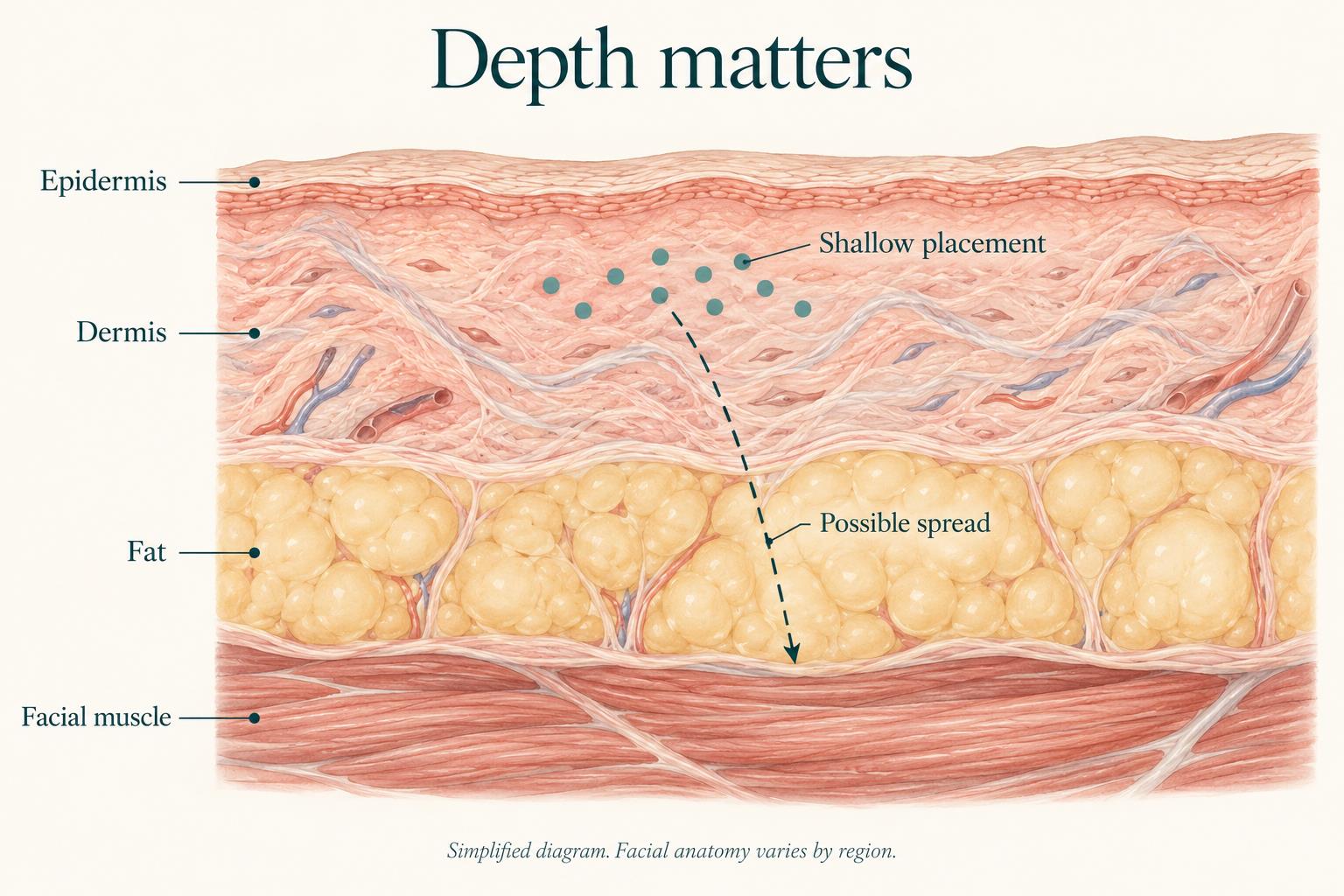
Facial anatomy varies across regions. Some facial muscle fibres are closely associated with the skin, and toxin can spread beyond the intended target. Around the mouth, even a small change in muscle function can become noticeable when smiling, speaking or pursing your lips.
In a small controlled cheek study, one participant developed facial weakness. That finding cannot tell us the overall complication rate, but it does show why “skin only” should not be treated as “no expression risk”. See the randomised cheek study and its product-name correction.
Before treatment, mention any previous smile asymmetry or unwanted weakness. A useful consultation should assess your face in movement, not just while you are sitting still.
3. Does skin Botox help oily skin and enlarged pores?
It may help some people, particularly when oiliness is a major concern. The evidence is promising in places, but inconsistent.
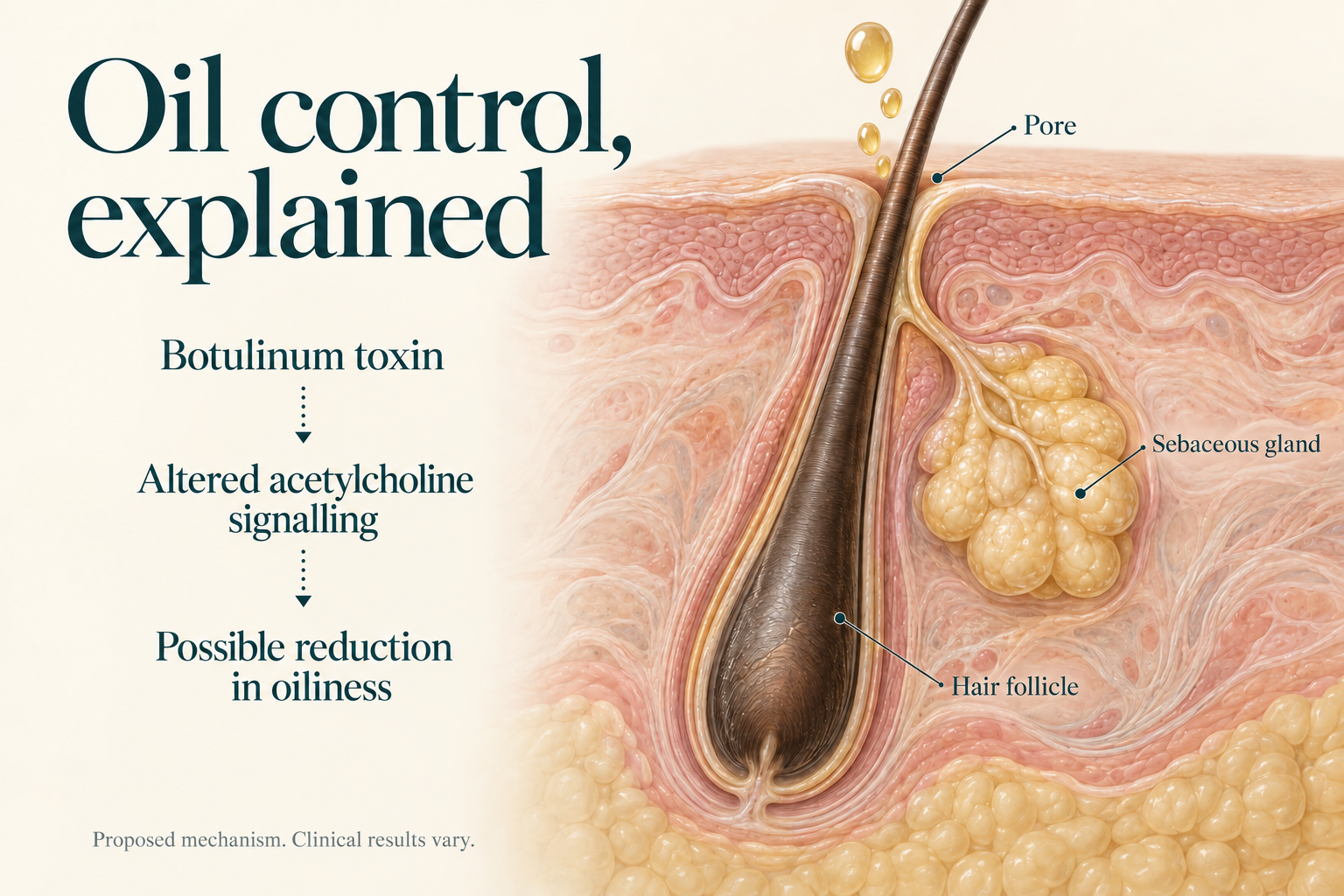
One proposed explanation involves acetylcholine, a signalling molecule involved in skin biology as well as muscle activation. Botulinum toxin may alter signalling related to sebum production. This is not the same as destroying oil glands, and the full clinical mechanism remains uncertain. Read the review of sebum-related mechanisms.
A 20-person split-face pilot study compared toxin with saline. Its published abstract reports greater improvement in sebum and pore scores on the toxin-treated side at one month, with improvement maintained at four months. A small pilot study, however, cannot establish the result everyone should expect.
The 2022 cheek trial did not find a significant sebum benefit or a significant between-side pore-size difference. It found improvements in some texture and wrinkle measures. Different protocols and outcomes help explain why clinic promises should be treated cautiously.
The realistic goal is a possible change in oiliness or how visible pores look. It is not permanently poreless skin.
Pores are normal structures. Oil production, follicle size and surrounding skin support can all influence their appearance. A depressed acne scar may look like a “large pore” in a photograph, but needs a different assessment.
4. What about fine lines, glow and lifting?
Some people may notice a smoother appearance, but “glow” is not a precise medical outcome. Reduced shine, softer fine creasing and improved texture are different changes, and should be discussed separately.
The small cheek trial reported texture improvements through eight weeks and improvement in one wrinkle measure through twelve weeks. This does not establish reliable treatment of deep folds or substantial laxity. A smoother-looking surface also does not, by itself, prove increased hydration.
At your consultation, name the change you actually want: less midday oiliness, softer fine lines, or a less visible pore pattern. That is more useful than asking for “better skin” and hoping one treatment does everything.
5. When should you judge the result?
Do not judge the outcome from the first post-treatment photograph. Needle-related swelling can temporarily change the surface appearance.
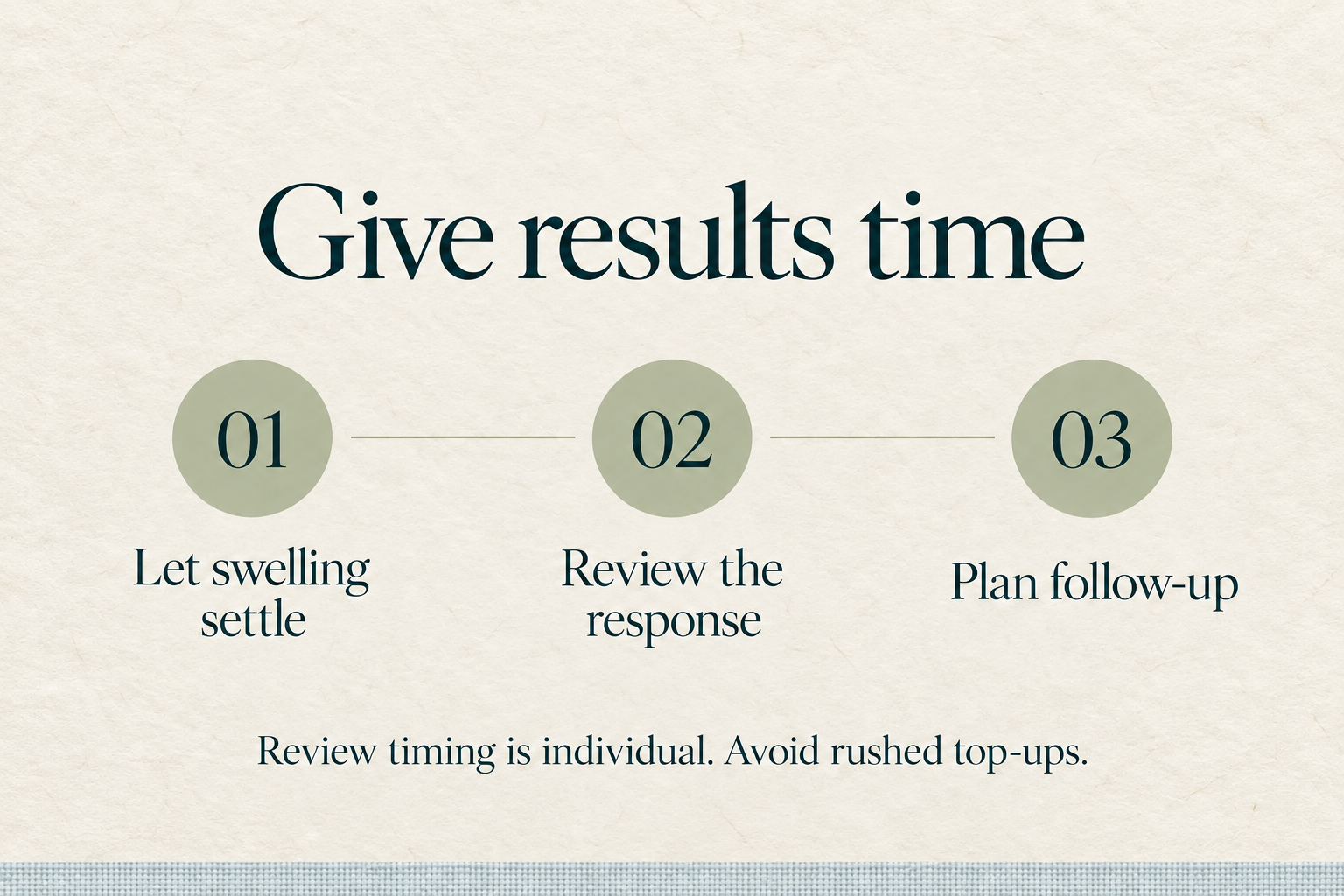
The studies discussed here assessed outcomes at visits such as two to four weeks, then followed particular measures for longer. Those checkpoints are research observation times, not guaranteed onset or duration.
Agree on a review date with your clinician. Compare photographs in similar lighting and with the same facial expression. If you see little change, first check whether the chosen treatment actually addresses your concern before arranging more injections.
6. Can repeated skin Botox cause resistance?
It is possible to develop neutralising antibodies that reduce the response to botulinum toxin. Shallow placement does not make the treatment immune to this issue. However, an underwhelming result is not proof of antibody-related resistance.
A 2023 pooled analysis of onabotulinumtoxinA trials found antibody formation was uncommon across multiple indications. It was not a skin-Botox-only study, and its findings cannot be applied as a precise risk estimate for every product or injection protocol.
A review of botulinum toxin immunogenicity discusses treatment-related factors such as dose and injection intervals. A sensible approach is to avoid unnecessary frequent boosters and have the clinician plan the minimum treatment needed for the intended goal. No interval or formulation can guarantee zero risk.
Keep a record of all toxin treatments, including wrinkle, jaw, shoulder or sweat treatments: dates, product names, treated areas and doses when available. Share the complete history, even if different clinics performed them.
7. What side effects should you watch for?
Small raised injection marks, redness, tenderness, swelling or bruising can occur. The bumps sometimes called “embo” in Korean clinics are injection-site swellings, not a measure of how well treatment will work.
Contact the treating clinician if you develop a changed smile, lip weakness or another unexpected change in facial movement. Describe when it started and provide photographs or a short video if requested. Recovery and management depend on the affected function and severity.
Do not assume an extra injection or a device treatment will simply reverse the problem. An assessment should come before any attempt at correction.
Seek urgent medical care for trouble swallowing, speaking or breathing, or significant new visual symptoms. These need assessment rather than waiting for an online reply. See the product safety information.
8. Planning skin Botox during a trip to Korea

If your trip is short, the key question is not just “Can I fit in an appointment?” It is “How will the response be assessed, and who will help if something changes after I leave?”
- Clarify the treatment. Ask for the product name, intended areas, goal and itemised price. A treatment-menu name alone is not enough.
- Leave room for review. Discuss important photographs, events and your departure date before choosing the timing.
- Confirm communication. Ask which language is available for consent, aftercare and follow-up, and how to contact the clinician after returning home.
- Take a treatment record. Keep the product, dose, date and clinic contact details for any later assessment.
I would not choose a repeat treatment simply because a holiday is ending. A review can identify whether any further treatment is appropriate, and may lead to waiting instead.
For related planning, read Botox in Korea: timing, brands and aftercare and planning your trip around skin-treatment downtime.
Quick questions
Is skin Botox better than regular Botox?
They have different aims. The more useful question is whether your concern is mainly muscle-driven creasing, oiliness, surface texture or something else.
Will it permanently close my pores?
No. Pores remain part of normal skin. Any improvement in their appearance is variable and temporary.
Can I combine it with other treatments?
A clinician should decide after reviewing your skin, treatment history and timetable. A package is not automatically more appropriate than a single carefully selected treatment.
My takeaway: skin Botox can be worth discussing for selected concerns, especially oiliness and fine texture. The best plan starts with a specific goal, realistic expectations and a way to review both skin changes and facial movement.
Your own, Dr. Youro
Research and further reading
- Sayed KS et al. The efficacy of intradermal injections of botulinum toxin in the management of enlarged facial pores and seborrhea: a split face-controlled study. Journal of Dermatological Treatment. 2021;32(7):771–777. DOI. Study summary above is based on the published abstract.
- Shin DM et al. A Double-Blind, Split-Face, Randomized Study on the Effects and Safety of Intradermal Injection of Botulinum Toxin Type A 150 kD Neurotoxin in the Cheek. Annals of Dermatology. 2022;34(6):442–450. Full article. 2023 correction: the study used Coretox, and the original incobotulinumtoxinA terminology was corrected.
- Rho NK, Gil YC. Botulinum Neurotoxin Type A in the Treatment of Facial Seborrhea and Acne: Evidence and a Proposed Mechanism. Toxins. 2021;13(11):817. DOI.
- Jankovic J et al. Neutralizing Antibody Formation with OnabotulinumtoxinA (BOTOX) Treatment from Global Registration Studies across Multiple Indications: A Meta-Analysis. Toxins. 2023;15(5):342. DOI.
- Wee SY, Park ES. Immunogenicity of botulinum toxin. Archives of Plastic Surgery. 2022;49(1):12–18. DOI.
Additional safety reference: BOTOX Cosmetic US prescribing information. This article explains treatment considerations and does not replace an individual medical assessment.


Leave a Reply