By Youro Kang, MD · Dr. Youro
Korean doctor · Aesthetic medicine
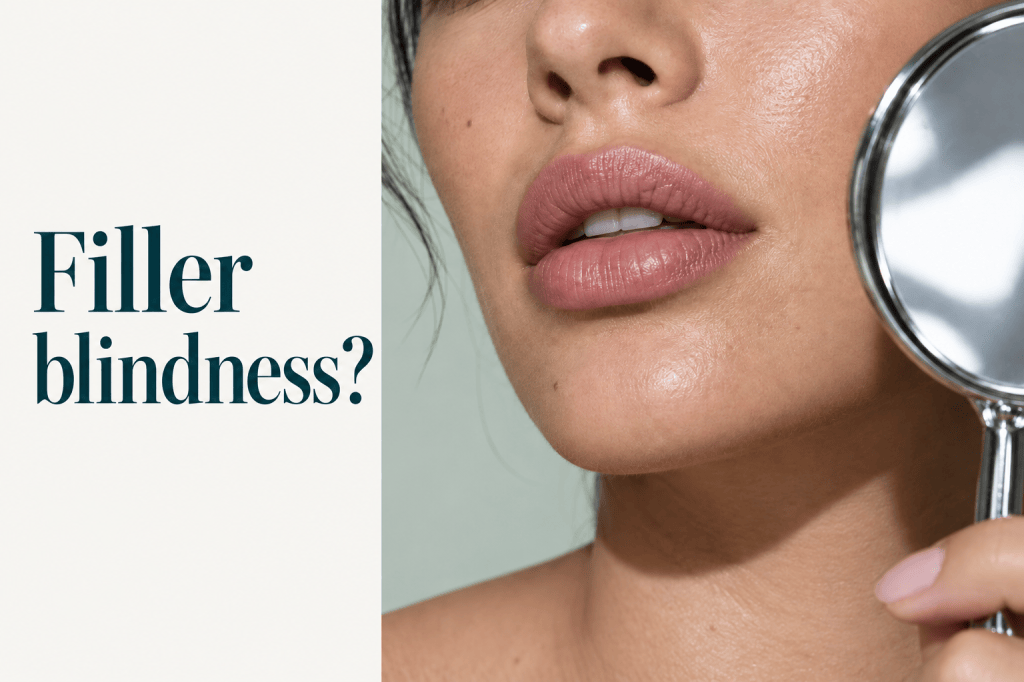
You loved the result. A few months later, the same lips somehow look small again. Has the filler faded—or has your idea of “enough” moved?
I’m Dr. Youro, a Korean doctor writing about aesthetic medicine. Before you book another top-up—at home or on a trip to Seoul—here is a useful question: are we treating a new concern, or chasing a new normal?
This article uses “filler blindness” in its colloquial sense. Actual changes in vision after filler are a medical emergency; see the safety note below.
What is filler blindness?
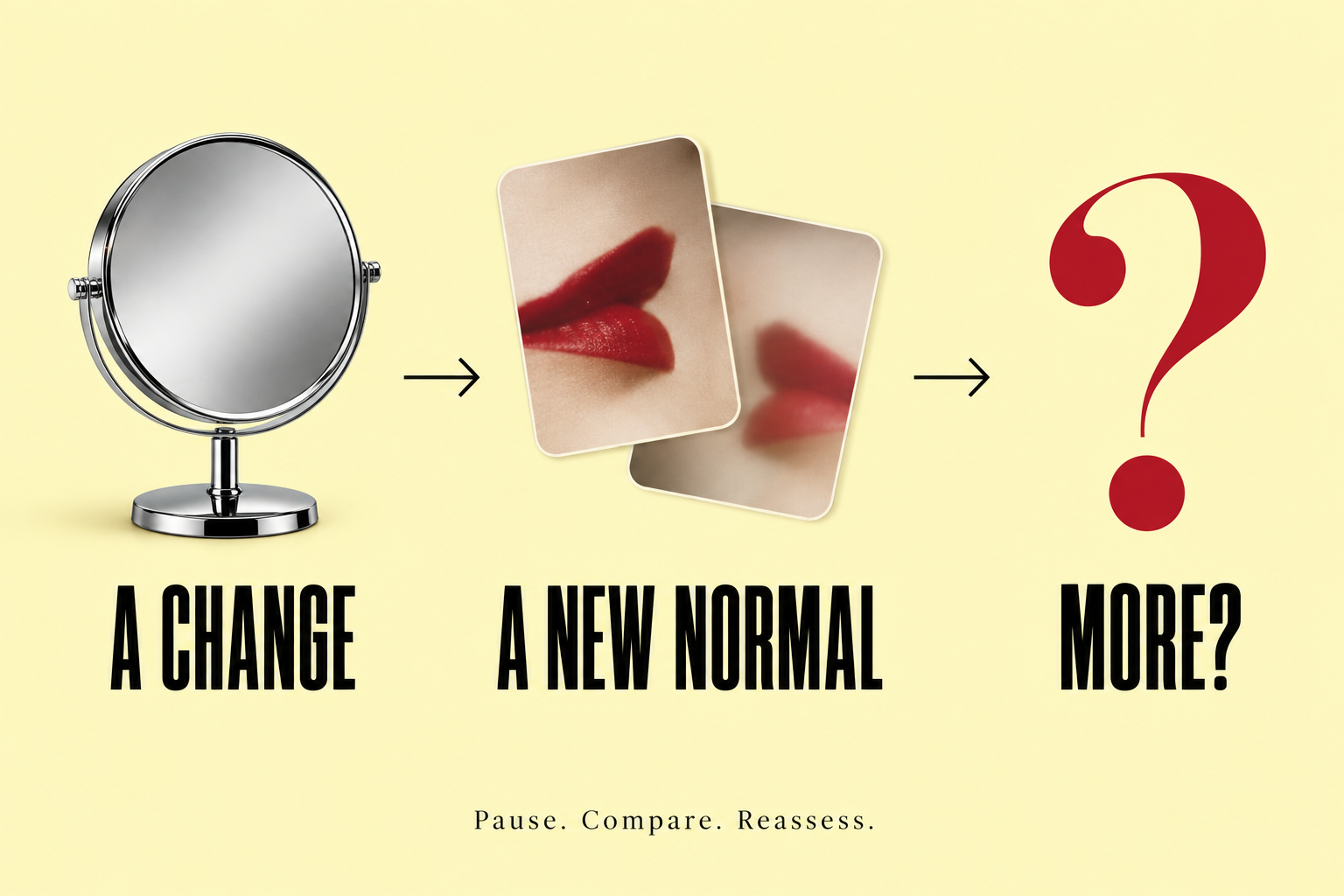
Think of turning up the saturation on a photograph. After looking at the vivid version for a while, the original can feel unusually muted. Your reference point has shifted.
Something similar may influence aesthetic preferences. A feature that once looked noticeably fuller can begin to feel familiar. “Just a little more” is then judged against the latest appearance, rather than the face you started with.
That does not make a preference for fuller lips wrong. “Natural” is not a universal size, and a different taste is not a diagnosis. The concern is losing track of your own original goal.
Does research support the idea?
There is evidence that visual exposure can shift preferences. In a 2021 laboratory study, 48 women viewed digitally altered faces with thinner or fuller lips. Their attractiveness ratings shifted toward the lip fullness they had seen. However, the same shift was not found in ratings of naturalness. This was a short visual experiment, not a study proving that social media causes people to keep adding filler. [1]
A 2023 interview study explored the experiences of 24 women selected for marked changes to lip anatomy after filler. Some described larger lips becoming their normal, and researchers identified perceptual drift as a theme. These interviews help explain an experience; they do not tell us how common it is among all filler patients. [2]
My practical takeaway: keep a reference point outside your latest selfie. This is a sensible consultation habit, not a scientifically validated “cure” for filler blindness.
Fading filler, settling swelling—or a shifting baseline?
These can feel similar in the mirror, but they are different questions.
| What you notice | What to check |
|---|---|
| “They looked bigger straight after treatment.” | Early swelling can add temporary fullness. Do not use an immediately post-treatment selfie as the target result. [4] |
| “It has been a year, so surely it is gone.” | Elapsed time alone does not establish how much filler remains. Review the area and your treatment history. [3] |
| “The change no longer feels noticeable.” | Compare consistent photographs and discuss what has actually changed before choosing more volume. |
A 2024 MRI series found signals consistent with residual hyaluronic acid filler in all 33 selected mid-face patients who reported no further injections there for at least two years. That challenges a simple “the calendar says it is gone” assumption. [3]
It does not establish how long your lip filler will last. The study examined the mid-face, not lips; imaging signals do not measure the original injected amount or guarantee a visible cosmetic effect. It was not a 15-year follow-up of all 33 patients.
Before “a little more”: five useful checks
1. Go back to your starting point
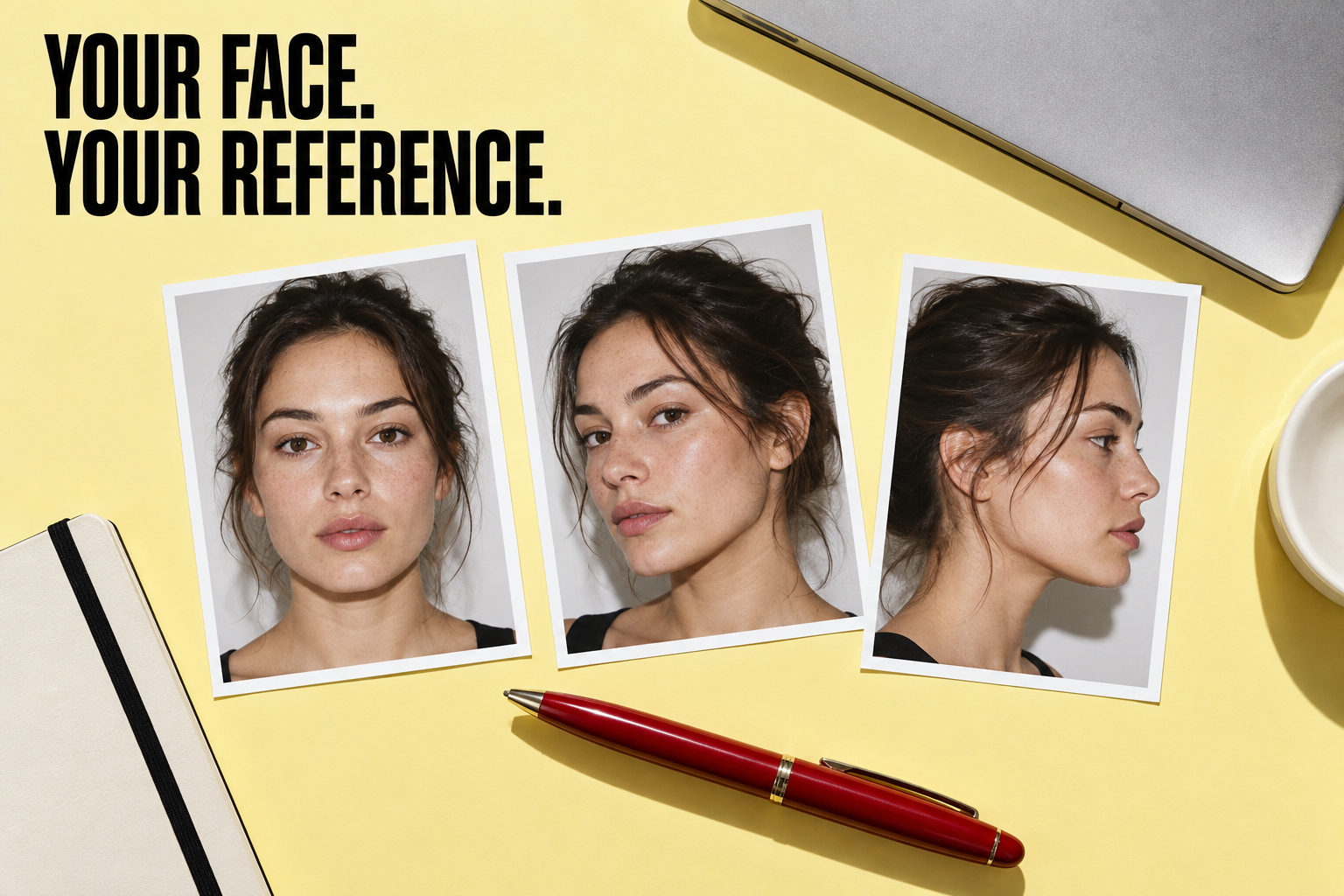
Bring photographs from before your first treatment, not only before the most recent appointment. Similar lighting, camera distance, angle and expression make comparisons more useful. Allow for ageing and weight changes too.
2. Name the goal without naming a syringe
“I want a little more definition when I smile” is more useful than “I want another millilitre.” Ask which specific feature would change, and how you would decide that enough has been achieved.
3. Look beyond a cropped selfie
Discuss your whole face, profile and movement. A feature should make sense in conversation and ordinary light—not only in a close-up with a filter.
4. Give yourself room to pause
If a stream of highly edited faces has become your only reference, step back from it. You do not need to replace one influencer with another “ideal face.” Return to your own goals and a broader range of everyday faces.
5. Ask for the doctor’s independent judgement
“Would you recommend more if I had not asked for it?” is a worthwhile question. Ask the clinician to explain the assessment, including the option of no treatment. If you remain unsure, a second opinion can be more useful than another top-up.
Considering lip filler during a Korea trip?
Book an assessment, not a predetermined amount. A short holiday, a package price or a spare afternoon should not decide how much filler your face needs.
Bring the dates, products, treated areas and amounts from previous treatments, plus any dissolving procedures or complications. If you do not know the product, say so rather than guessing.
Useful questions for a consultation in Korea:
- What do you think is still present, and what concern would more filler address?
- Could waiting or doing nothing be a better option?
- When should we review the result, and does my departure date allow that?
- Who should I contact urgently, including after I return home?
Keep a copy of your treatment record and written aftercare in a language you understand. For travel planning, read Skin Treatment Downtime in Korea and the seven questions to ask before treatment.
If you think your filler looks overdone
Arrange an assessment before adding more or deciding to dissolve it. Appearance alone cannot distinguish all causes of fullness or unevenness. Removal or reduction also carries risks and may be difficult, particularly with permanent or non-HA fillers. [4]
Quick answers
Is filler blindness a medical diagnosis?
It is a colloquial description used in discussions of aesthetic perception, not a diagnosis you can make from a selfie. It should not be confused with actual vision loss.
Does wanting more filler mean I have it?
No. Your preferences may be deliberate, or there may be a genuine change to assess. The useful question is whether another treatment serves a clear goal after reviewing your history and current appearance.
Is there a universal amount that looks natural?
No single number can define your preferred result. Discuss anatomy, existing filler, the product and the intended change with your clinician rather than treating a package amount as a target.
Can filler blindness be reversed?
There is no established treatment protocol for this informal label. A pause, consistent photographs and an independent assessment may help you reconsider your reference point. Dissolving filler is a separate medical decision.
Familiar does not always mean finished.
More does not always mean closer to your goal.
Keep the face you started with in the conversation.
Your own, Dr. Youro
References
- Goldie K, Cumming D, Voropai D, Mosahebi A, Fabi SG, Carbon CC. Aesthetic Delusions: An Investigation into the Role of Rapid Visual Adaptation in Aesthetic Practice. Clin Cosmet Investig Dermatol. 2021;14:1079–1087. doi:10.2147/CCID.S305976.
- Love M, Saunders C, Harris S, Moon Z, Veale D. Redefining Beauty: A Qualitative Study Exploring Adult Women’s Motivations for Lip Filler Resulting in Anatomical Distortion. Aesthet Surg J. 2023;43(8):907–916. doi:10.1093/asj/sjad050.
- Master M, Azizeddin A, Master V. Hyaluronic Acid Filler Longevity in the Mid-face: A Review of 33 Magnetic Resonance Imaging Studies. Plast Reconstr Surg Glob Open. 2024;12(7):e5934. doi:10.1097/GOX.0000000000005934.
- U.S. Food and Drug Administration. Dermal Fillers (Soft Tissue Fillers). Patient safety and risk information.


Leave a Reply