By Youro Kang, MD · Dr. Youro
Korean doctor · Aesthetic medicine
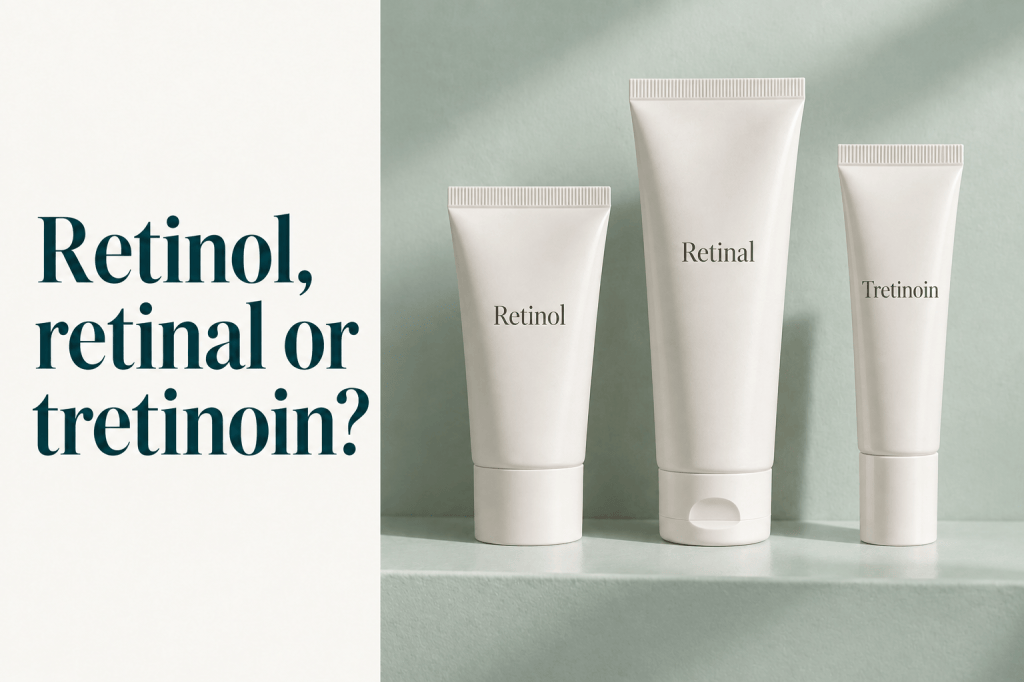
Standing in a Korean skincare shop, “retinol,” “retinal” and “retinoid” can sound like three competing ingredients. They belong to the same family—but they are not interchangeable.
Retinol vs retinal vs tretinoin
| Name | What it means | Practical difference |
|---|---|---|
| Retinoid | An umbrella term for vitamin A-related compounds. | It does not tell you which ingredient—or how strong a product—is inside. |
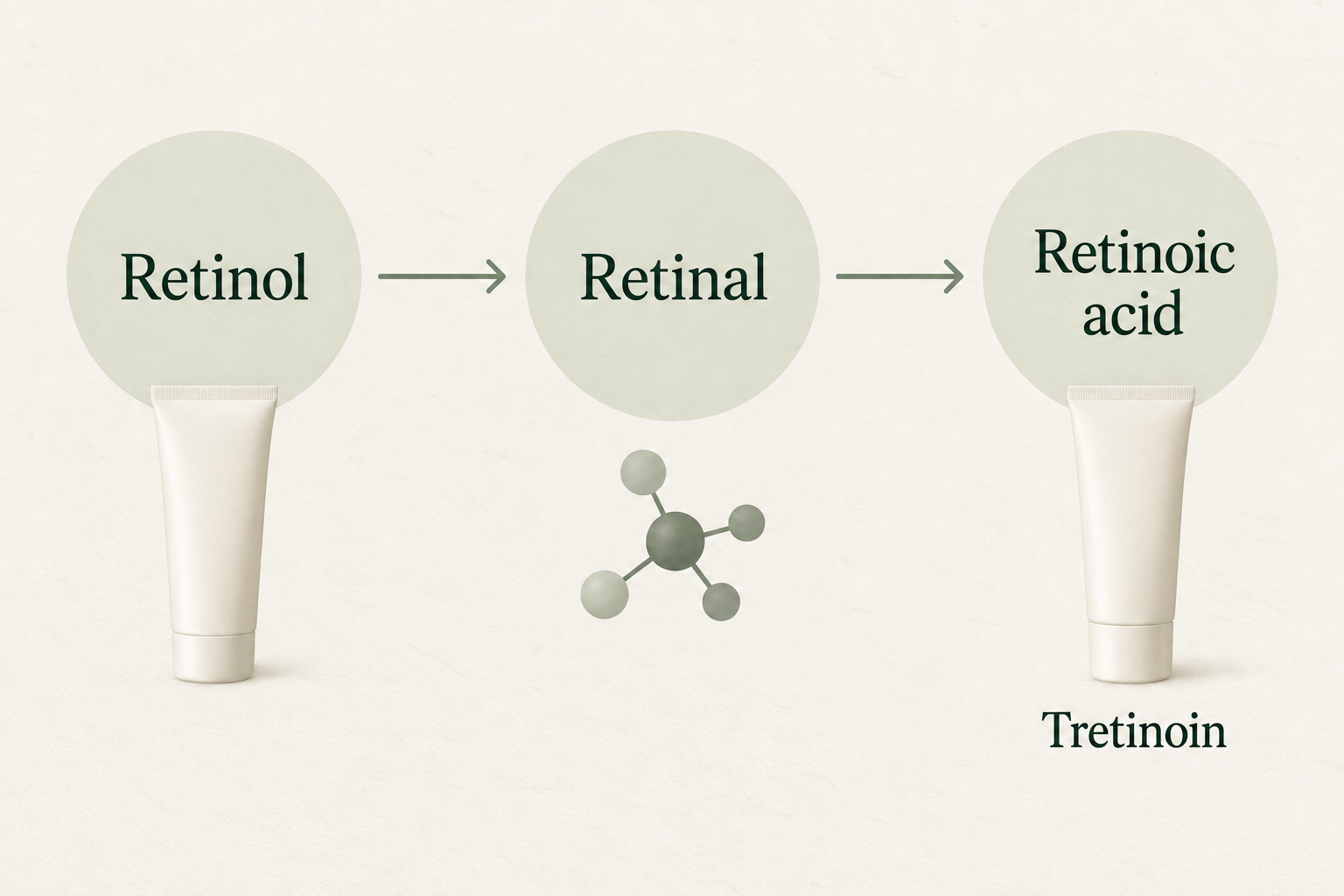
| Retinol | A vitamin A form converted through retinal to retinoic acid in skin. | Common in cosmetics. Formulation and tolerability matter as much as the percentage. |
| Retinal / retinaldehyde | An intermediate on that conversion pathway. | One conversion step from retinoic acid; this does not create a universal potency ranking across products. |
| Tretinoin / all-trans retinoic acid | The active molecule, without those precursor conversion steps. | A prescription topical medicine in the US, with substantial evidence for photoaging and a risk of irritation. |
The American Academy of Dermatology explains the retinoid family and why the right choice depends on the skin concern and tolerance. “Retinoic acid” is a broader chemical term; in discussions of topical tretinoin, it refers to the all-trans form.
Is tretinoin better for wrinkles?
Tretinoin has a stronger clinical evidence base for photoaging than a generic “anti-ageing serum” claim. A systematic review of seven randomised trials found improvements in signs such as fine wrinkling and uneven pigmentation, with different formulations and treatment periods. Sitohang et al., 2022.
That does not make the strongest prescription the best choice for every traveller. A product you can use consistently without persistent irritation may fit better than one that leaves your skin sore. Expect a long-term routine measured in months, not a treatment souvenir that transforms skin during one holiday.
Nor can you convert percentages directly: 0.1% retinol is not equivalent to 0.1% tretinoin. Packaging, stability and the complete formulation influence a product’s performance.
Before laser, Potenza or a peel in Korea
Show the clinic the actual product—or a photograph of the ingredient list—and say how often you use it. Include prescription acne medicines as well as cosmetics.
- Ask whether to pause it before treatment and when to restart. There is no universal stop-and-start interval for every laser or skin type.
- Avoid introducing a stronger product immediately before an unfamiliar procedure or a sun-heavy holiday.
- After treatment, follow the recovery routine provided by your clinician. Do not apply retinoids to raw, peeling or persistently irritated skin without advice.
Buying skincare in Korea: three checks
| Check | What to ask |
|---|---|
| The ingredient | Is it retinol, retinal, a retinyl ester, tretinoin or a different retinoid? Similar packaging does not mean the same medicine. |
| The routine | Does it fit the products and clinic treatments you already use? Ask a pharmacist or prescribing clinician about prescription medicines. |
| The journey home | Check your destination’s medicine import rules and keep original packaging and any prescription documentation. Cosmetic and prescription products are regulated differently. |
When should you be cautious?
Dryness, burning, redness and peeling are reasons to reassess the routine, not proof that it is “working harder.” Irritation can also leave dark marks, especially in pigment-prone skin. Avoid retinoids during pregnancy; if trying to conceive or breastfeeding, discuss products with your clinician. AAD retinoid guidance.
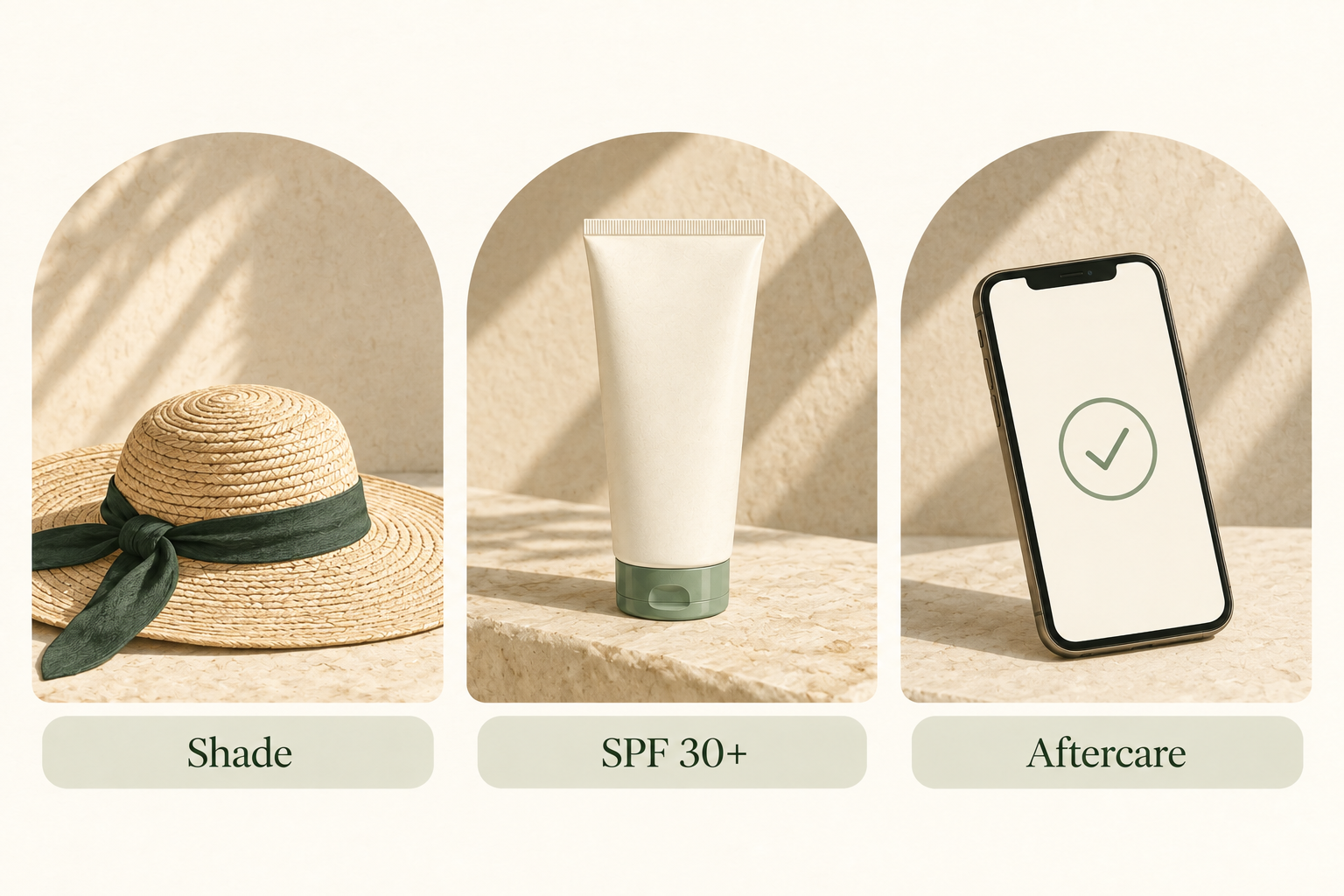
Use daytime sun protection and introduce products gradually according to their instructions and your clinician’s advice. Do not add several new exfoliating or retinoid products at once when you need to identify what your skin tolerates.
Quick answers
Is retinol the same as a retinoid?
Retinol is one retinoid. The family also includes other cosmetic ingredients and medicines with different indications.
Does a retinol serum replace a skin-tightening treatment?
No direct equivalence is established. Topical skincare and energy-based procedures have different goals, risks and evidence; choose for the concern rather than the “anti-ageing” label.
Can I start a new retinoid during my Korea trip?
If procedures, strong sun exposure or a changing routine are planned, discuss timing first. Waiting until your routine is stable can make irritation easier to recognise and manage.
Read the research & references
The evidence supports careful selection, not a universal winner.
- Sitohang IBS et al. Topical tretinoin for treating photoaging: A systematic review of randomized controlled trials. Int J Womens Dermatol. 2022;8:e003. DOI: 10.1097/JW9.0000000000000003. Seven trials; formulations, endpoints and follow-up differed.
- Siddiqui Z et al. Comparing Tretinoin to Other Topical Therapies in the Treatment of Skin Photoaging: A Systematic Review. Am J Clin Dermatol. 2024;25:873–890. DOI: 10.1007/s40257-024-00893-w. 25 studies; many comparisons were low quality or at risk of bias.
- Chien AL et al. Biomarkers of Tretinoin Precursors and Tretinoin Efficacy in Patients With Moderate to Severe Facial Photodamage. JAMA Dermatol. 2022;158:879–886. DOI: 10.1001/jamadermatol.2022.1891. A 24-week randomised trial analysed 20 White women. A specific precursor combination showed no significant efficacy difference from tretinoin, with less redness. The small, industry-supported study does not prove all retinol products equivalent.
- AAD: Retinoid or retinol?
Planning a procedure too? Read Pico or Laser Toning? and Skin Tightening in Korea.


Leave a Reply