By Youro Kang, MD
Your own, Dr. Youro
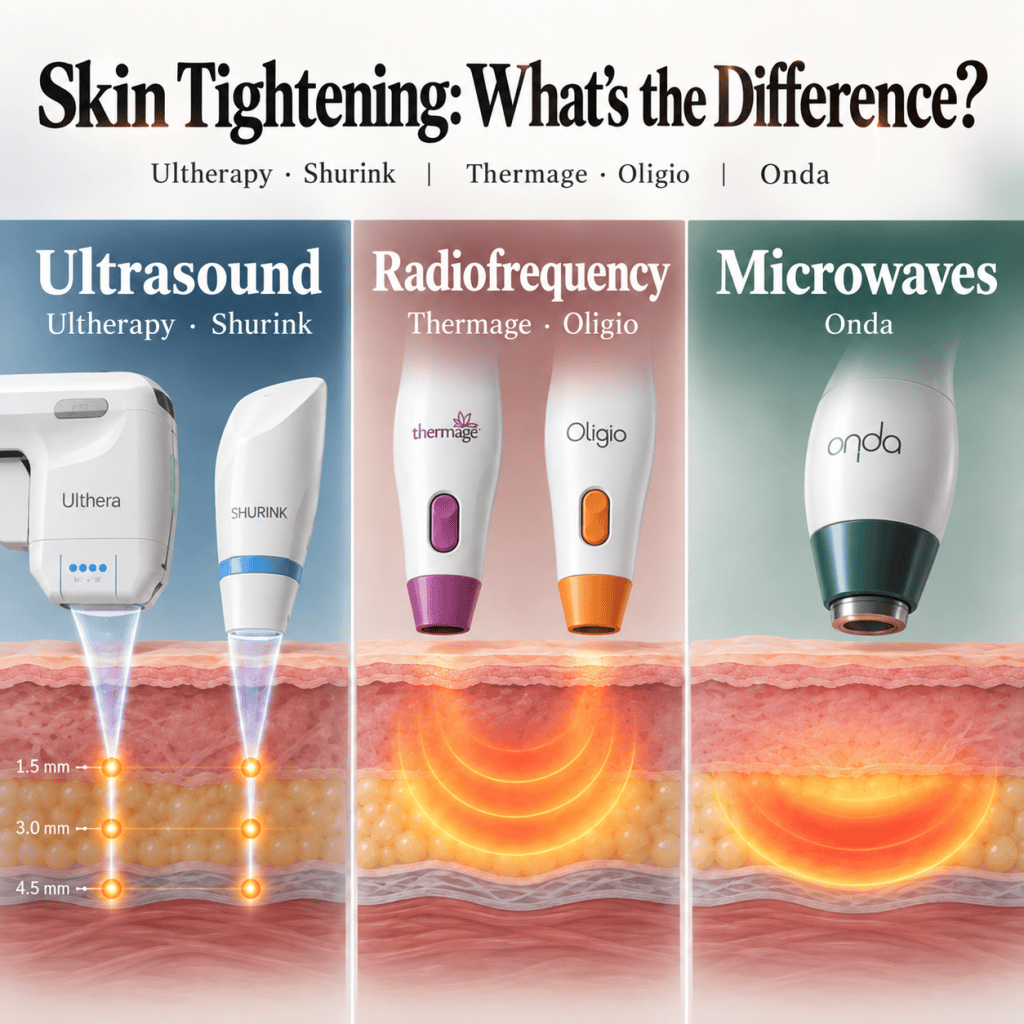
If you have been looking into skin treatments in Korea, you have probably come across Ultherapy, Shurink, Thermage, Oligio, and Onda. They are often grouped together as “lifting” treatments—but they do not all work in the same way.
The main difference is the energy they use: Ultherapy and Shurink use focused ultrasound; Thermage and Oligio use radiofrequency (RF); Onda uses microwaves. The right choice depends on what is causing your concern, not simply which device is most popular.
Hello, I’m Dr. Youro Kang, a physician practicing aesthetic medicine in Seoul. Let’s break down these technologies in plain English, then look at what the research can—and cannot—tell us.
Illustrations simplify tissue layers and heating patterns; they are not treatment maps.
In Korean clinics, “lifting” is often an umbrella term for nonsurgical tightening and contouring. These treatments are not equivalent to a surgical facelift. Device names and approved uses can also differ by country.
At a glance: five names, three types of energy
| Technology | Examples | How it delivers heat |
|---|---|---|
| Focused ultrasound | Ultherapy; Shurink / Ultraformer family | Concentrates energy into small treatment zones at selected depths. |
| Monopolar radiofrequency | Thermage; Oligio | Heats a broader volume of tissue through electrical resistance. |
| Microwaves | Onda | Uses 2.45 GHz electromagnetic energy to heat targeted tissue; the handpiece and settings matter. |
1. Why are there so many skin-tightening devices?
One question helps make sense of almost every device: What type of energy is delivered, to which tissue, and in what pattern?
Facial aging is not just one layer of skin becoming loose. Collagen and elasticity change, fat compartments change in volume and position, and deeper supporting structures also change. That is why one device—or the same treatment plan—cannot be right for everyone.
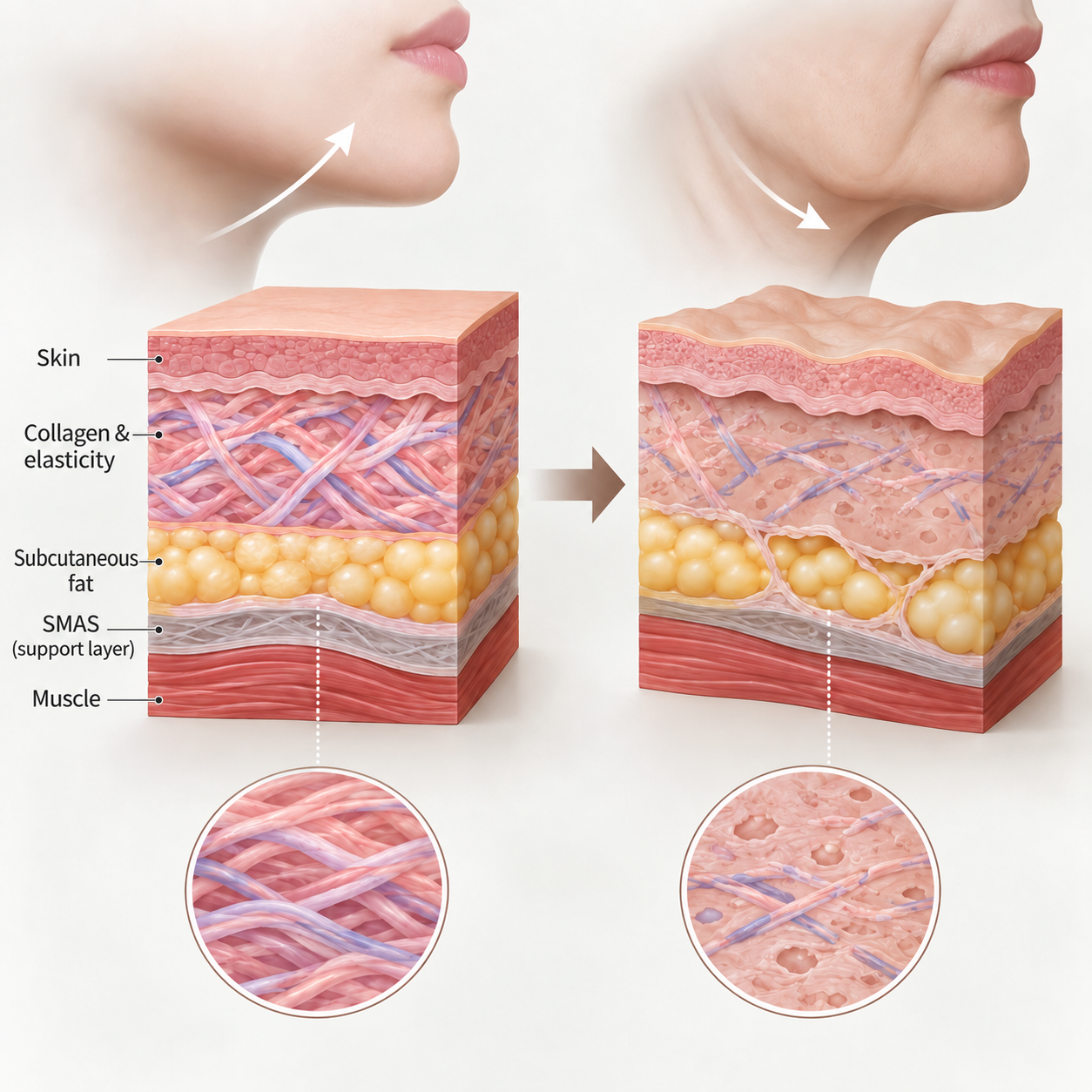
A softer jawline might reflect skin laxity, excess fat, facial structure, or a combination. Hollow cheeks are a different problem again. Before choosing a machine, we need to understand what we are trying to treat.
A terminology note: treatments marketed as “Titanium lifting” use laser energy, a separate category from the three technologies discussed here. A shared marketing word does not mean a shared mechanism.
2. Ultherapy vs. Shurink: focused ultrasound
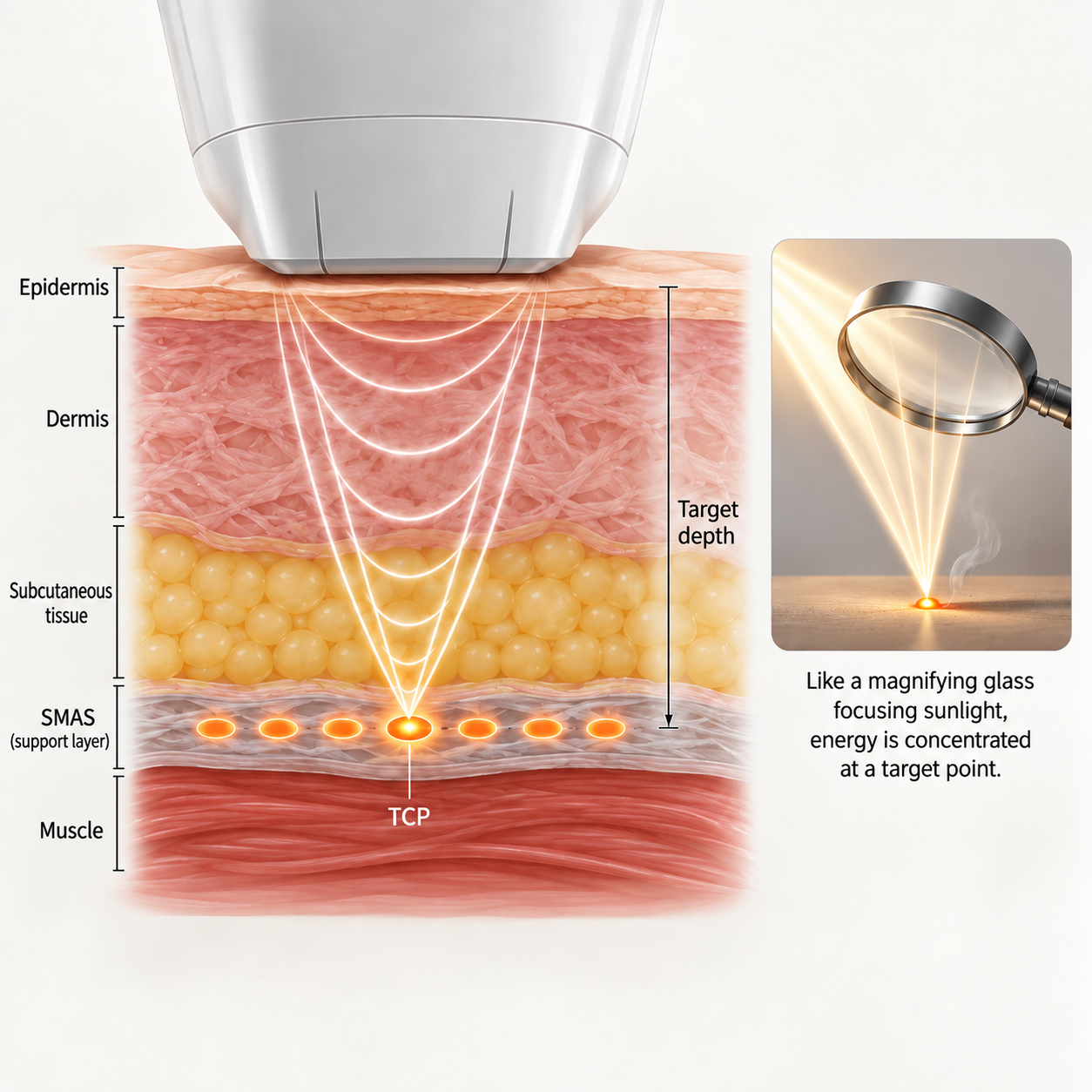
Both concentrate ultrasound energy at a selected depth beneath the skin. A useful analogy is a magnifying glass focusing sunlight: energy is concentrated in a small target area rather than spread evenly across the surface.
In treatment, this creates small thermal coagulation points (TCPs)—controlled zones of heating intended to trigger tissue contraction and subsequent remodeling. The exact tissue reached depends on the cartridge, facial anatomy, treatment area, and technique.
What does the research show?
In a 2007 study, White and colleagues examined six human cadaver specimens. They used ultrasound imaging to identify the superficial musculoaponeurotic system (SMAS), a supporting tissue layer, and showed that focused ultrasound could create localized thermal injury zones while relatively sparing surrounding tissue. This helps explain the mechanism; it is not, by itself, proof of a visible lift in living patients. [1]
A 2023 systematic review by Contini and colleagues included 16 clinical studies, all involving female patients. It found evidence of improvement in mild-to-moderate facial skin laxity, but devices, treatment settings, and outcome measurements varied. This supports realistic expectations of improvement—not a guarantee, and not proof that every ultrasound device performs equally. [2]
So how are Ultherapy and Shurink different?
Ultherapy includes real-time ultrasound visualization. This lets the clinician assess tissue layers during treatment planning and delivery. Shurink systems discussed in the original comparison do not provide the same real-time tissue imaging. Their transducers, energy delivery, and treatment protocols also differ.
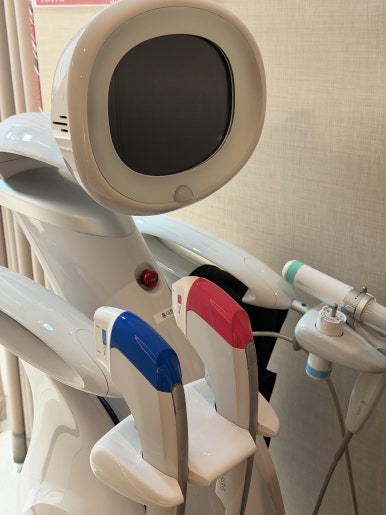
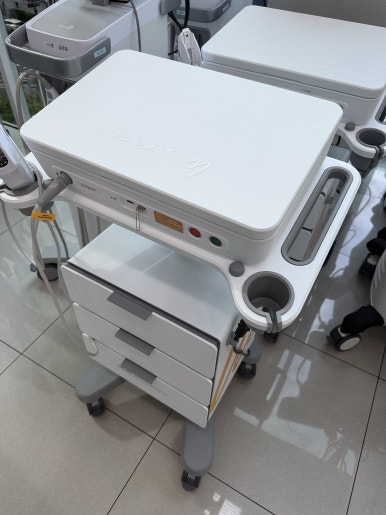
Device photographs from the original Korean article.
For international readers, Shurink is a Korean brand name associated with Classys’s Ultraformer family: Shurink corresponds to Ultraformer III, while Shurink Universe corresponds to Ultraformer MPT. Always ask which model a clinic actually uses. Classys product information; model naming.
Visualization is a meaningful technical difference, but it does not make one treatment automatically best for every face. Appropriate patient selection and the clinician’s treatment plan still matter. Ultherapy is often priced higher in Korea; the actual quote depends on the clinic, model, treatment area, and protocol.
3. Thermage and Oligio: radiofrequency, not ultrasound
Thermage and Oligio use monopolar radiofrequency. Electrical current travels through tissue between the treatment electrode and a return pad, producing heat because the tissue resists that current.
Rather than creating the discrete focal points shown in the ultrasound diagram, RF is used to heat a broader tissue volume. The aim is collagen contraction and remodeling, with potential improvements in skin laxity and fine lines. Cooling, energy control, tip design, and treatment technique all influence how heat is delivered.
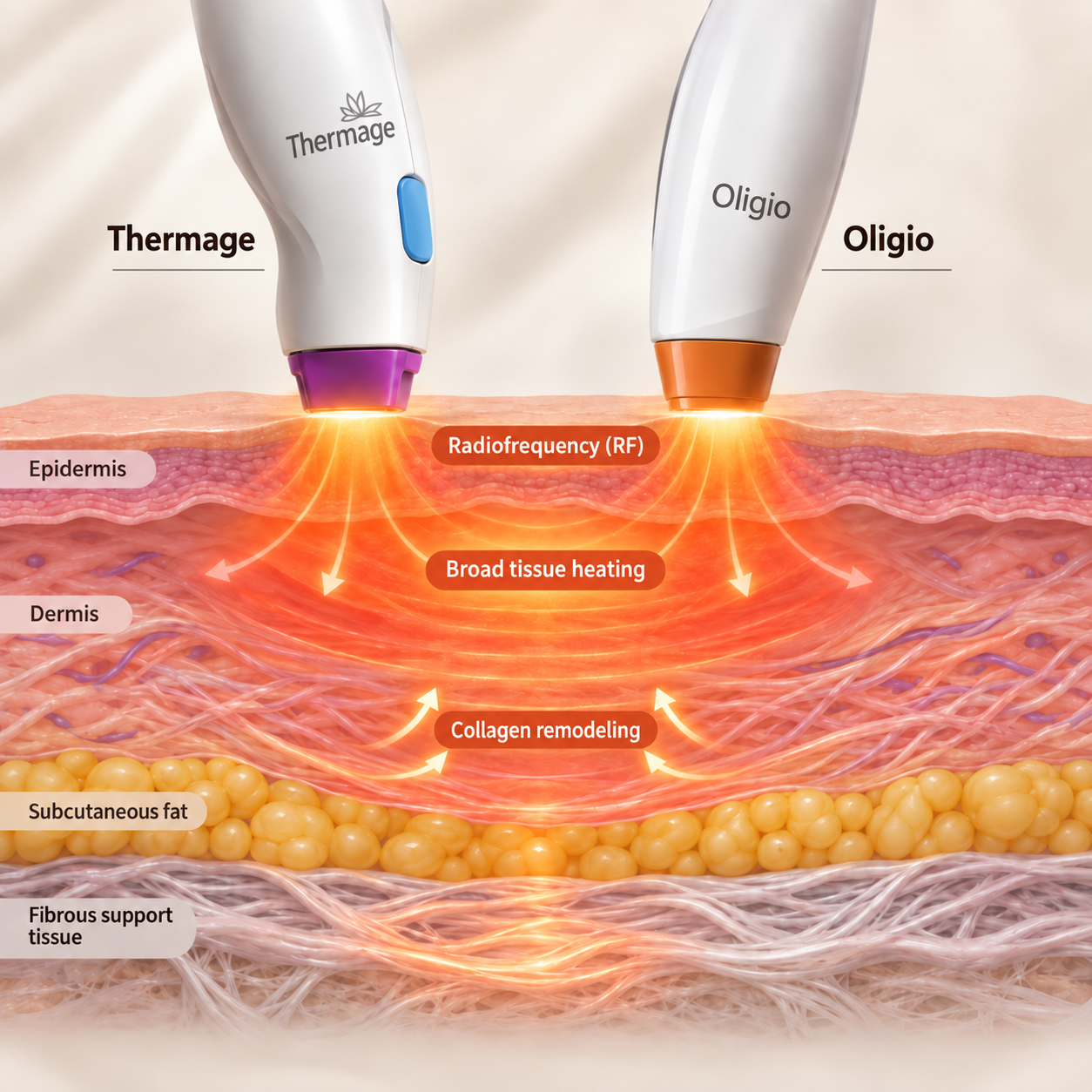
A systematic review by Austin and colleagues identified 121 articles on RF for facial and neck rejuvenation. It reported improvements in measures such as laxity, elasticity, wrinkles, and overall appearance, alongside tissue changes consistent with collagen and elastin remodeling. However, the review covered different RF technologies and indications, including acne and scars. It should not be read as 121 trials proving identical results for Thermage and Oligio. [3]
Ultherapy or Thermage—which suits my concern?
This is a useful consultation question, but it cannot be answered from a device name alone. The guide below is a starting point for discussion, not a prescription.
| Your concern | What to discuss |
|---|---|
| “My lower cheeks or jawline look droopy.” | Focused ultrasound may be considered for suitable laxity. First distinguish tissue descent from fat volume or skeletal structure. |
| “My skin feels less firm and has more fine lines.” | RF may be considered. The pattern of wrinkles, skin thickness, and overall laxity need assessment. |
| “My eyelid skin looks crepey or loose.” | Distinguish loose skin from brow descent or true eyelid ptosis. Any energy treatment near the eye requires an appropriate device, tip, protection, and trained clinician. |
| “I have fullness under my chin.” | Determine whether fat, loose skin, or anatomy is the main cause. Fat-directed treatments are a different discussion from tightening alone. |
| “My cheeks look hollow.” | Assess volume loss before choosing a treatment that may reduce fat. Volume restoration or other approaches may be more appropriate. |
| “The sagging is severe.” | Discuss the limits of nonsurgical devices. A surgical assessment may be more useful than repeated energy treatments. |
4. Onda: how do microwaves fit in?
Onda uses 2.45 GHz microwave energy. Microwaves are electromagnetic waves; they heat tissue through a process called dielectric heating. Clinically, this is discussed as a distinct device category from the monopolar RF systems above, although both use electromagnetic energy.
Depending on the handpiece and settings, treatment can target connective tissue and subcutaneous fat. When sufficient heat injures fat cells, the body’s inflammatory and cleanup processes—including macrophages—may contribute to a gradual reduction in the treated fat layer.
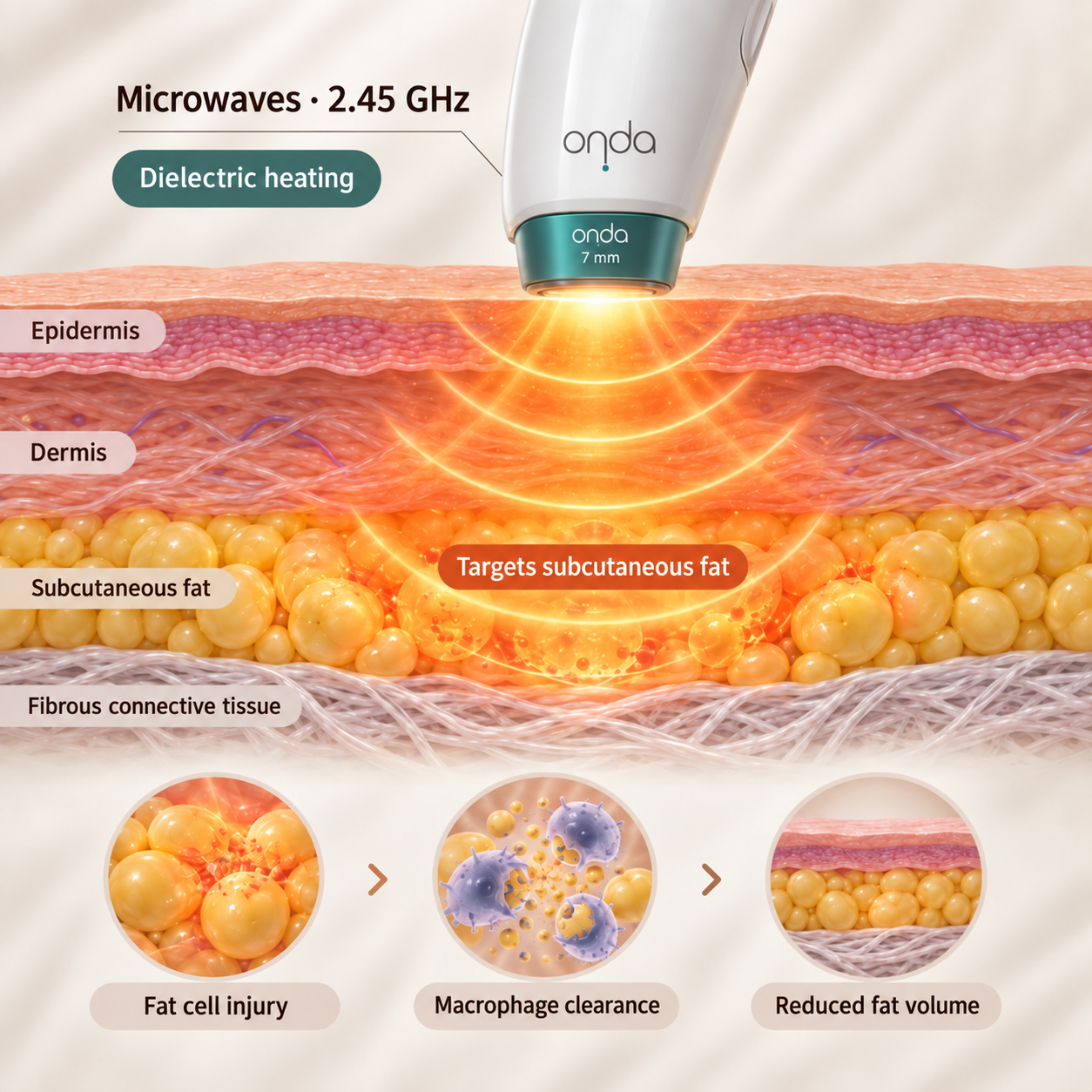
That is why Onda is often discussed for localized fat and fullness under the chin, sometimes alongside skin laxity. It is not a universal answer for every double chin, and fat reduction may be undesirable in an already thin or hollow face.
What evidence is there for the area under the chin?
In a 2022 study, Salsi and Fusco treated 48 participants with a microwave device over six sessions. Assessment 12 weeks after the final session showed lower clinician-rated submental fat and skin-laxity scores than at baseline. Of 47 participants assessed for satisfaction, 33 (70.2%) were satisfied or very satisfied. [4]
These are encouraging findings, but the abstract describes a before-and-after series without a comparison group. It does not establish superiority over ultrasound or RF, and the reported outcome after six sessions should not be presented as the expected result of one session. No adverse effects were reported in this small study; that does not mean the treatment has no risks.
5. What about risks and recovery?
“Nonsurgical” does not mean risk-free. Discomfort, redness, swelling, bruising, or temporary altered sensation may occur, depending on the device and treatment. Burns and unintended tissue injury are also possible. The ultrasound review reported pain and mostly temporary reactions, with less common complications including sensory changes and burns. [2]
Ask your clinician about risks specific to the proposed device, anatomical area, and your medical history. Tell them about previous procedures and implanted devices, and ask what symptoms should prompt urgent review. A sensible plan includes follow-up, especially if you are traveling.
The key takeaway: match the treatment to the cause
A useful first approximation is focused ultrasound for selected laxity, RF for tightening, and microwaves for selected contouring concerns. But these are overlapping areas—not rigid boxes.
Your skin thickness, fat distribution, facial shape, degree of laxity, and goals all matter. The most useful question is not “Which machine is best?” but “What is causing my concern, and why does this treatment fit it?”
If you are planning treatment in Korea, my seven questions to ask before an aesthetic treatment can help you prepare for the consultation.
Frequently asked questions
Are Ultherapy and Shurink the same treatment?
They belong to the focused-ultrasound category, but they are not interchangeable. Imaging capability, transducers, energy delivery, and treatment protocols differ. Confirm the exact model and treatment plan.
Is Ultherapy better than Thermage?
There is no universal winner. They use different forms of energy, and the evidence summarized here is not a direct head-to-head comparison. Your anatomy and the problem being treated should guide the choice.
Does Onda only reduce fat?
No. It is also studied for laxity in selected areas, but the result depends on the handpiece, settings, and treatment protocol. Benefits reported for one area or protocol should not be assumed for every facial treatment.
Are these “lifting lasers”?
Not technically. The devices compared here use ultrasound, RF, or microwaves—not laser light. “Lifting laser” is sometimes used loosely in Korean marketing.
References and source notes
- White WM, Makin IR, Barthe PG, Slayton MH, Gliklich RE. Selective creation of thermal injury zones in the superficial musculoaponeurotic system using intense ultrasound therapy: a new target for noninvasive facial rejuvenation. Arch Facial Plast Surg. 2007;9(1):22–29. DOI · PubMed.
- Contini M, Hollander MHJ, Vissink A, Schepers RH, Jansma J, Schortinghuis J. A Systematic Review of the Efficacy of Microfocused Ultrasound for Facial Skin Tightening. Int J Environ Res Public Health. 2023;20(2):1522. DOI · PubMed.
- Austin GK, Struble SL, Quatela VC. Evaluating the effectiveness and safety of radiofrequency for face and neck rejuvenation: A systematic review. Lasers Surg Med. 2022;54(1):27–45. DOI · PubMed.
- Salsi B, Fusco I. Non-invasive system delivering microwaves energy for unwanted fat reduction and submental skin tightening: Clinical evidence. J Cosmet Dermatol. 2022;21(11):5657–5664. DOI · PubMed.
Research summaries were checked against the PubMed abstracts. Manufacturer information is used for device identification and features, not as independent proof of comparative effectiveness. For Ultherapy’s visualization feature, see the manufacturer’s description.
Adapted into English from my Korean article on Naver, originally published September 25, 2026. Explanatory illustrations retain the original composition with English labels; they are simplified, AI-assisted educational diagrams, not clinical photographs, precise anatomical maps, or guaranteed treatment outcomes. The original paper’s histology figures are not reproduced here; see reference 1 for the study.
This article provides general educational information and does not replace an individual medical assessment. The mention of a device does not imply that it is suitable for you or approved for every use in every country.
Dr.Youro
Your own, Dr. Youro


Leave a comment